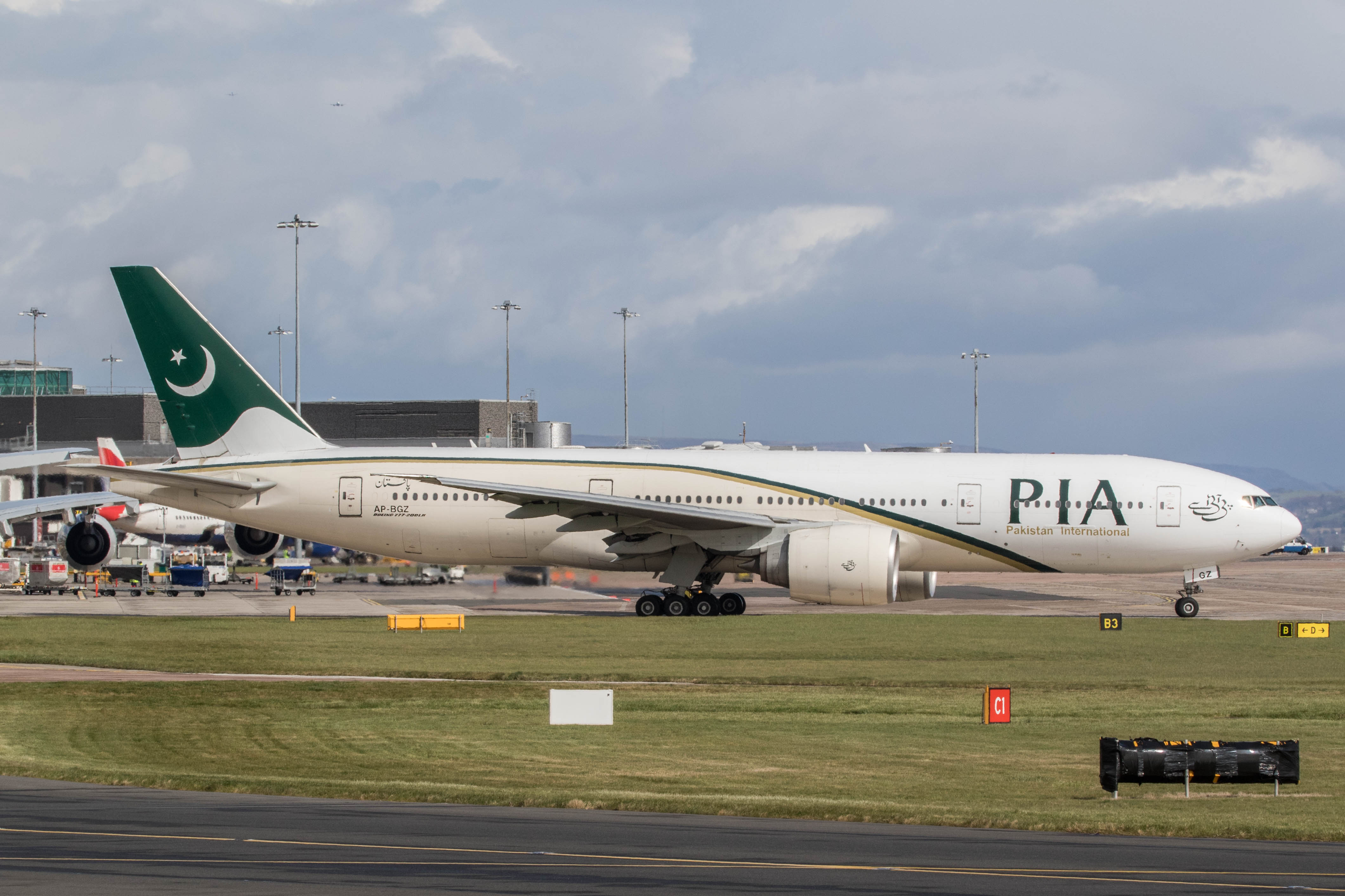
A Pakistan International Airlines Boeing 777 was grounded for eight hours at Manchester International Airport last Friday, 7 June, 2019.
A Pakistan International Airlines (PIA)
flight at Manchester Airport was grounded for eight hours because a passenger
mistook the emergency exit door for the toilet
Shortly before it was ready to
depart for Islamabad from Manchester last Friday, the Boeing 777’s emergency
door was activated which deployed the plane’s emergency slide.
The flight, which was supposed to
depart Manchester at about 8 p.m., was delayed until about 4 a.m. as passengers
were offloaded.
To make matters worse, frustrated
passengers voiced their issues with PIA when they finally arrived in Islamabad
to find out that somehow their luggage was left in Manchester.
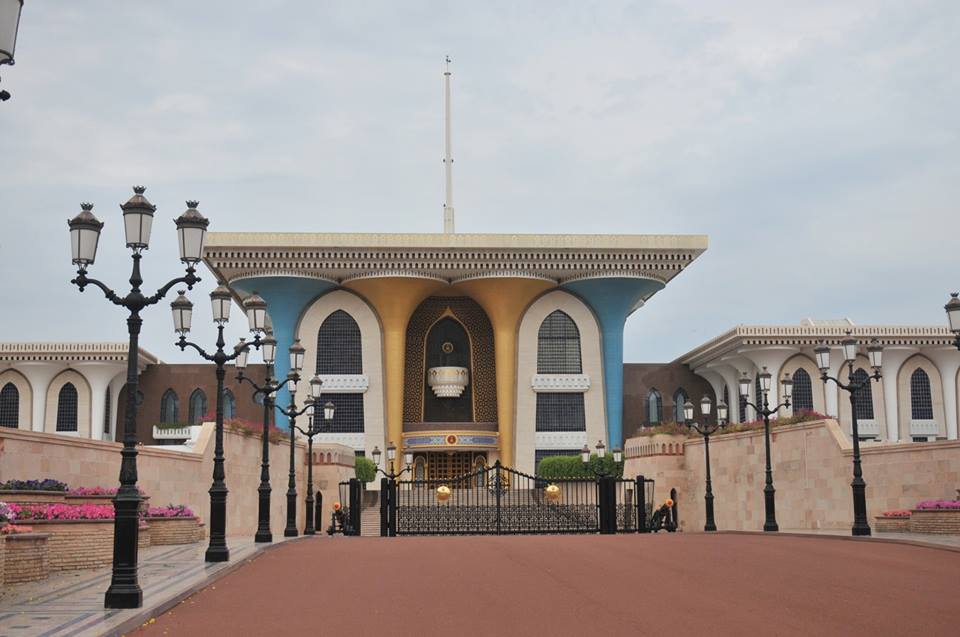
The Qasr al Alam Palace in Muscat is the official residence of the Emir of Oman. While entry to the palace is forbidden, you are allowed to take photographs of the building and surrounding areas.
Some of the best trips you can take
are the ones that are far from the maddening crowds.
In the past 10 to 15 years, travellers
have gone en masse to the United Arab Emirates’ two biggest states, Dubai and
Abu Dhabi.
But this post is not about the
gaudiest place on earth that is built on superlatives, but a tiny nation to the
south — Oman.
I have been to Muscat, Oman on two
occasions and it is m favourite place in the Middle East.
Unlike the UAE where things are not
what they seem, there is a sense of authenticity to Oman. This is first evident
by the fact that any tour guide you hire in Muscat is most likely an Omani. On
a few tours through Dubai and Abu Dhabi, I never had an Emirati tour guide.
Sometimes, we want a local to add to the experience.
There are two main ways into Muscat:
by sea on a cruise ship at Port Sultan Qaboos or by air at Seeb Airport.
The first thing you notice when you
get to Muscat is that it does not have an ultramodern skyline of architectural
wonders, but opts for a more modest skyline. Muscat’s planners felt that they
wanted to be different from their northern neighbours which restricts buildings
to more than three storeys high except for hotels and hospitals.
Everything in the country is
immaculate. The lawns are always mowed and looks like someone finished the job
with a pair of scissors. The streets are clean and the roads are in excellent
shape.
What makes this all truly impressive
is that most of the infrastructure did not exist before 1970.
Modern Oman was born out of unrest
when current Emir Qaboos bin Said al Said overthrew his father, Sultan Said bin
Taimur, in a bloodless coup in July 1970.
This coup was the instrumental
starting point for the transformation Oman from an under-developed backwater to
an infrastructure that would be the envy of some western countries.
Getting in:
Visa on arrival is available for most
western passport holders. For those who need a visa, you can purchase an e-visa
at the Royal Oman Police’s website or at Seeb Airport from the money changer
kiosks. Holders of Israeli passports and Israeli citizens will be refused
entry, but simply have an Israel stamp on other passports is not a problem for
entry.
The nation’s flag carrier airline,
Oman Air, offers flights from Asia and some destinations In Europe. British
Airways, Lufthansa, KLM, Turkish Airlines, Qatar Airways, Emirates, and Etihad
offer flights to North American travellers.
Getting around:
Taxis tend be the most popular way
of getting around Muscat. You could also rent a vehicle because driving is
relatively OK in Muscat compared to other Middle Eastern countries where rules
of the road are considered suggestions rather than law. Besides, you will love
the cost of petrol. To put this into perspective, a litre of petrol is cheaper
than a litre of water in Muscat. Current prices put a litre of petrol at £0.45 (CDN$0.75,
US$0.57, 0.51 euros).
Things to do:
Like most Middle Eastern countries,
much of the social life and trendy parts of Muscat can be found around the
Corniche which is the sea wall area near Port Qaboos. Here, you can find
restaurants and the Mutrah Souq where you can find bargains.
To catch a glimpse of Oman’s fishing
past, you can travel to Mutrah and watch the day’s catch come in, prepared, and
sent out to shops and restaurants.
Flanked by the al Jalali and the al
Mirani forts, the Qasr al Ayam Royal Palace is one of the world’s most
beautiful palaces in the world. Unfortunately, visitors are not allowed to
enter the palace, but you are allowed to take photographs of the palace’s
entrance.
One of the best museums to learn
about Omani history is the Bait al Zubair Museum which houses artefacts of Oman
and an overview of the flora and fauna that can be found around Oman.
Outside of the central business
district is the jewel of the Muscat landscape: Sultan Qaboos Grand Mosque,
which is the third largest mosque in the world.
Tours are available between 9 and 11
a.m. daily. The highlights of the mosque include a Swarovski crystal chandelier,
one of the largest Persian carpets, and the impeccable marbel panelling. Like
any other mosque in the Islamic world, female travellers must make sure to cover
their hair, ankles and wrists while inside the mosque.
Sleep:
There is a hotel choice for all
budgets which makes Muscat an appealing place for hotels. You can even splurge
a little and stay in five-star hotels. The Fraser Suites and Radisson hotels in
Muscat have rooms on for less than £100 a night. Even the most opulent of
hotels are not badly priced: Kempinski (£200 per night), Shangri-La (£182 to
£214), W Hotel (£221), Grand Hyatt (£177).
Safety:
While driving in Muscat is
relatively safe, Omanis tend to disregard the speed limit and pass randomly on
roads going to other parts of the country.
Homosexuality is considered a crime,
therefore, LGBT travellers should exercise caution.
Crime is not a significant issue in
Oman.
The biggest concern is the extreme
heat associated with a desert nation. The last time I was there, it was 46C. By
the time I went out on a 4×4 mountain drive at 8 a.m., it was already 36C. Be
sure to drink plenty of water and do what the locals are doing. Usually they
will sit in the shade instead of trying to cool down in water. Try to wear
loose fitting breathable clothing. Jeans or other tight clothing will overheat
you.
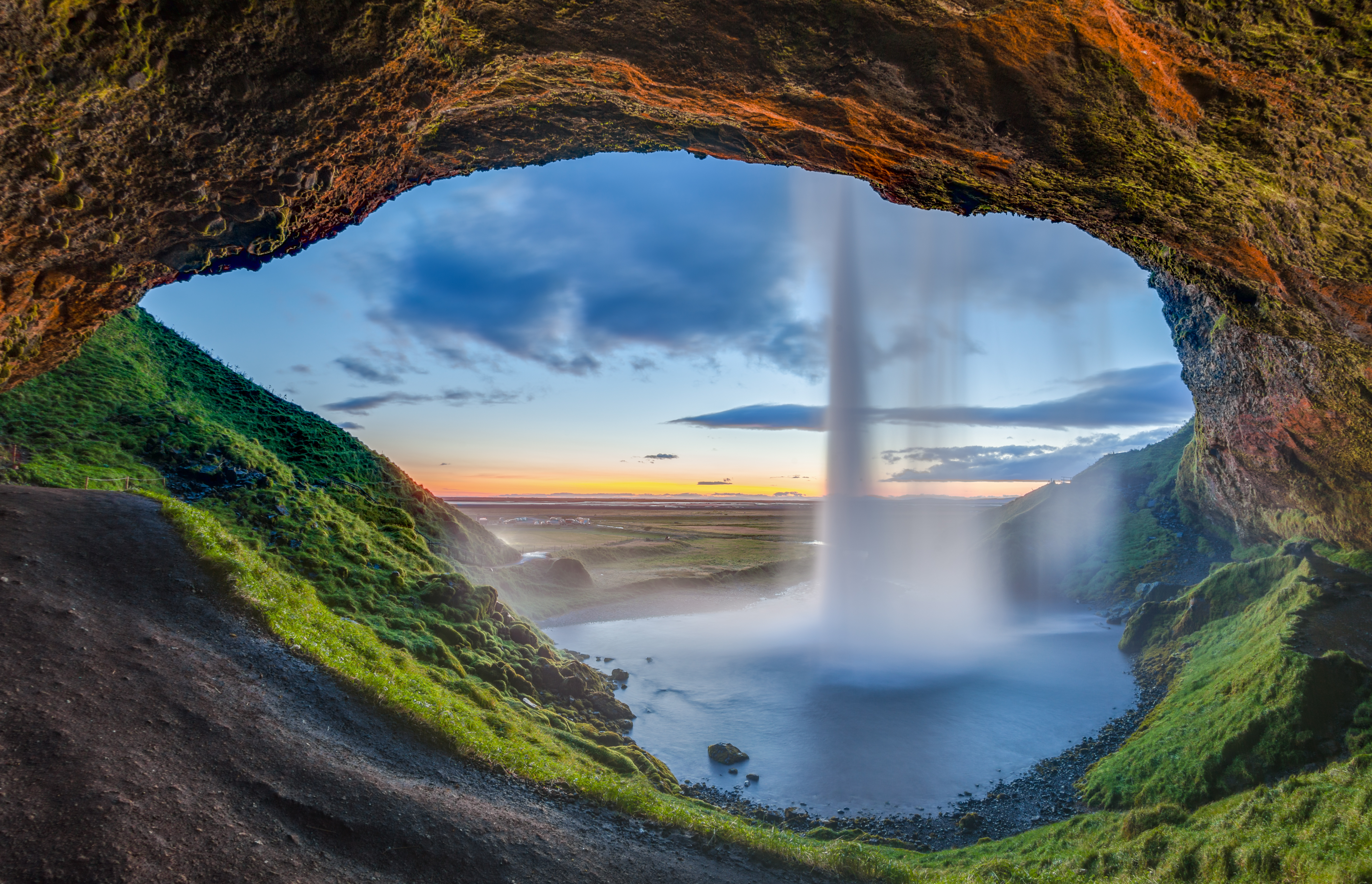
Seljalandsfoss is a spectucular waterfall in Iceland. The allure of the waterfall is that you can walk behind it.
Back
in the spring of 2010, a volcano on the tiny island nation of Iceland brought
the world to a standstill.
Eyjafjallajökull
(pronounced aye-ah-fyet-la-your-koot-sh) erupted, spewing ash into the
air, which led to the closure of airspace and grounded all flights to and from
North America and Europe for six days.
The volcano
had a positive knock-on effect because suddenly Iceland was in the news and the
collective conscious of people.
Tourism has
spiked ever since with people wanting to visit this beautiful land of ice and
fire.
Another
positive result is that there are a large number of airlines that fly to the
tiny Scandinavian country. Flights from Western Europe take about 2.5 to 3
hours while flights from the Eastern part of North America take about 4.5 to 5
hours and 8 hours from Western North America.
Getting there
The most
direct flights are offered by Iceland’s flag carrier, Icelandair, while several
other flag carriers offer direct and 1-stop flights to Iceland.
Icelandair: Direct flights to and from major North
American and European cities to Keflavik.
Delta Airline: Operates direct flights from JFK in New
York.
EasyJet: Offers direct flights from several UK
airports and Geneva.
Eurowings: Seasonal flights from Cologne.
Wizzair: Direct flights from Baltic nations.
SAS: Direct flights to Oslo and connecting flights to
Stokholm and other Scandinavian Cities.
Norwegian: Direct flights to Oslo.
British Airways: Direct flights to Heathrow.
Air Canada: Seasonal to Toronto and Montreal.
Finnair: Direct to Helsinki.
Lufthansa: Direct to Frankfurt
All flights
to Iceland arrive at Keflavik Airport which is about a 40-minute drive from the
country’s largest city, Reykjavik.
One of the highlights
of flying into Iceland, especially if you are coming from Europe, is the
scenery you see when you first descend below the clouds. It is like nothing on
earth. In fact, it looks like a different planet when you see the lava rock
formations on the ground.
If you are
on a night flight and the conditions are right, it could be possible to see the
Aurora Borealis.
Getting around:
Iceland is
a driver’s dream especially if you like driving over difficult terrains. If you
are an inexperienced driver, then it may be better not to drive. Three people
from the UK, including a baby, died in a crash last year due to a lack of
experience of driving on rough terrain.
There is
only 1 major highway, Route 1, which circles the country, and several rural
paved and gravel roads that traverse the country.
It is
possible to get around Iceland by airplane, but it is very expensive. Because
the local airlines hold a monopoly, the price of flights between Reykjavik and
Akureyri, Iceland’s second largest city, can be as much as the price of the flight
you took to get to Iceland.
There
is a reliable coach system which can get you around Iceland. But it can be even
more expensive than flying around Iceland.
For the
more physically fit, cycling around Iceland is an option. However, you should
bring your own bike as purchasing a bike locally can be expensive.
Key destinations:
Pretty much of all Iceland is
worth seeing and being such a small country, it is easily achievable to see the
entire country in about two weeks.
For those
of you on shorter trips, focus on certain areas. One of the most popular routes
is the Golden Circle which will take you to Gulfoss waterfall, the Stokkur geyser,
and other important areas of Þingvellir National Park. The park is also the
site of the longest running parliament in the world and where the European and
North American continental shelves meet.
Further
afield and to the immediate north of Reyjkavik is Snæfellsnes which is not only
a spectacular peninsula, but also the setting for Jules Verne’s Journey to the Centre of the Earth.
To
the north of Snæfellsnes are the West Fjords, an area dominated by rugged
geography and steep hills.
If you want to visit Eyjafjallajökull, it is located about
140 km southeast of Reykjavik near the town of Ásólfsskáli.
One
of the most popular tourist destinations is The Blue Lagoon, which is about 40
km from Reykjavik. It is a surreal place because of its component and setting.
It is a geothermal spa in the middle of a lava field. The result is a hot
spring with milky blue water.
How
to best see Iceland:
If you are experienced and
comfortable driving on rough terrains, you can rent a 4×4 vehicle to see the
country. Due to its small size, you are not far from your next destination so
you won’t spend large amounts of time driving. You can set your bases in
Reyjkavik to see the city and Snæfellsnes. Another base could be Ísafjörður
to see the West Fjord Region. From Akyureri, you can strike out to see Myvatn.
Höfn could be a good base from which you can visit the southeast of the
country. Finally, Selfoss can be a good based to travel into the middle of
Iceland.
The
other major reason people go to Iceland is to see the Aurora Borealis. This is
best seen in the winter months and there is even a forecast of the chances of
seeing them on a day to day basis.
Cost:
Iceland is very expensive. If
you have travelled to other parts of Scandinavia, then that will give you an
idea of your costs. Accommodation outside of Reykjavik can cost about £75 and
up per night. While you could expect to pay slightly more in the capital
region.
Iceland
is well known for its coffees which are excellent and the prices are
comparative to Europe or North America. However, alcohol is very expensive. You
could expect to pay about £35 for a bottle of house wine or £8.50 for a beer.
A
tip for those who like to have a drink is to buy your alcohol duty free at
Keflavik Airport. After baggage claim and just before you walk into the
arrivals hall, there is a duty free shop which sells alcohol for about
one-third less than the high street.
The
first time I went to Iceland, I was chatting with a guy who was part of a stag
party going to Reykjavik. It was pretty funny to see the colour drain from his
face when I told him alcohol prices and he turned and berated the best man for
choosing Iceland as a stag destination.
Weather:
Iceland is very far north and
does not get warm. Also, the weather is very unpredictable. At the same time,
the winters aren’t as cold as northern Europe or North America. The big thing
about the weather in Iceland is the wind. It is such a wide open country that
the wind can be jarring. Summer is cool. Don’t go there expecting the
temperature to rise much more than 15C.
Last
summer, I was there and where I was staying was 18C. But a quick drive about
half an hour away in higher ground and the temperature was less than 10C. It
changes very quickly and without notice.
It
is not out of the question to pack warm clothing even in the summer. You do not
want to be under-dressed in Iceland.
Safety:
Iceland
also has a very tiny population. According to 2017 figures, a little more than
338,349 people live in Iceland with most of them living in the capital city.
In terms of
safety, Iceland is extremely safe. Violent crime is very low and murder is even
lower. In fact, there were no murders committed in 2008.
However,
with the boost to tourism, there has been an increase in sexual assaults, rape,
assaults, auto theft, and vandalism, but those figures are will well below
other major cities.
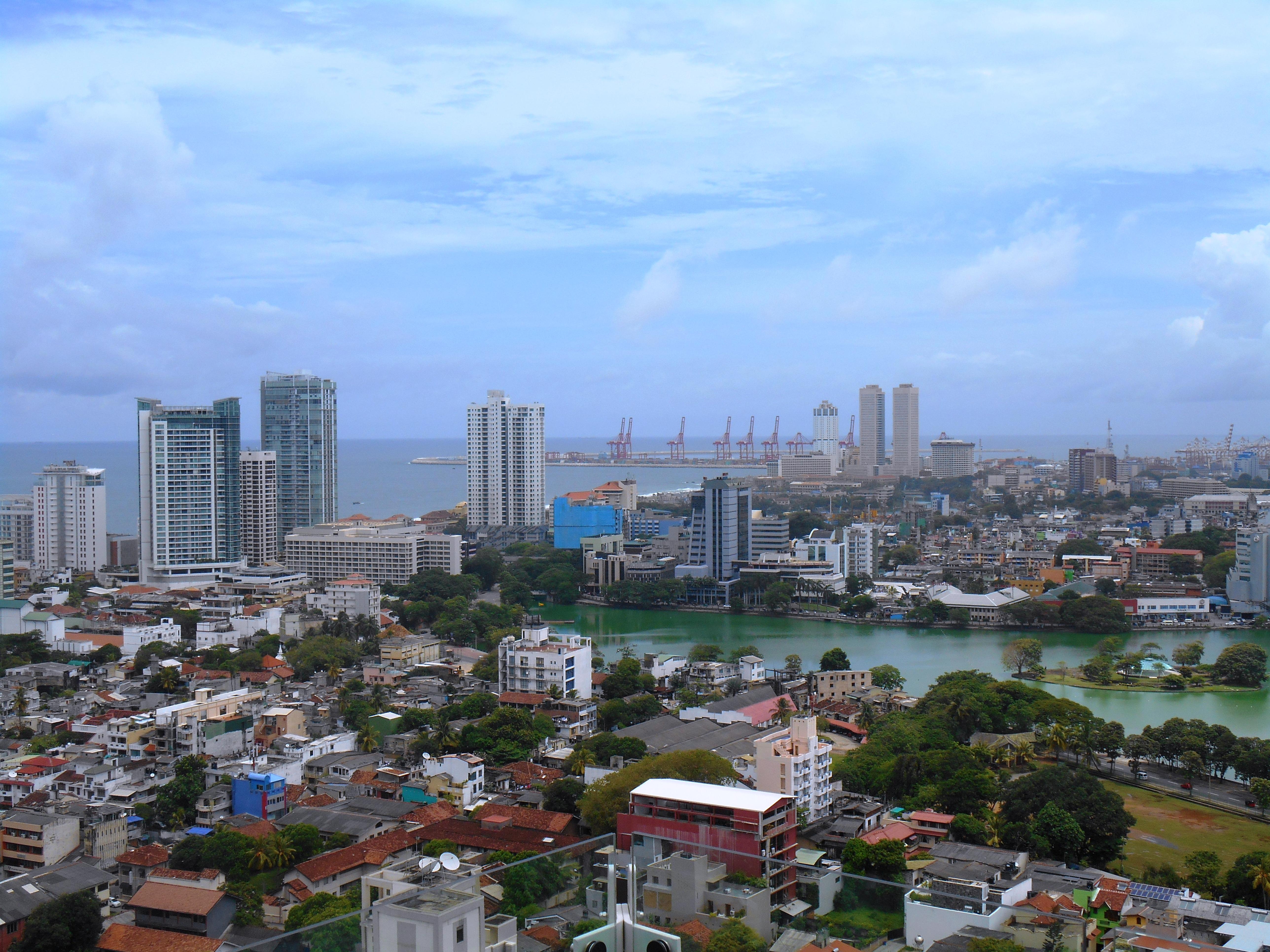
Colombo is the largest city in Sri Lanka. There is an eclectic mix of the old and new world in this capital city.
This
post is a request from a friend who wanted some tips on Colombo, Sri Lanka.
For
a long time, Sri Lanka was a no-go zone due to a civil war between the Tamil
Tigers and the Sinhalese government. But that all changed a decade ago and
people have flooded into the country to visit this lush country.
Sadly,
people have shied away again after the terror attack of Easter Weekend 2019
when terrorists bombed several Christian churches and five-star hotels. But
people are beginning to go back.
There
is a great movement in Colombo to fix the infrastructure and make the country a
jewel similar to what has gone on in Dubai and Abu Dhabi.
My
trip to Colombo was part of a Singapore to Dubai cruise I took in 2017. We
spent a day in the Sri Lankan capital and it is a place I want to visit again
for a longer period of time. Maybe I will do that during a cricket tour so I
can see more of the country.
Visa
requirements for western countries have changed. Now, you need an Electronic
Travel Authorisation (ETA) which you can get on the Sri Lankan foreign affairs
website. You input your passport data, pay the fee, and it is sent to you
almost instantly.
Getting
around the city is easy enough on tuk tuks, but be warned, most don’t have a
meter so you will have to negotiate and agree to a price before setting off. The
alternative is a taxicab. You are advised to choose cars with a sign in the window
that says “Meter Taxi”. The going rate for a taxi is 50 Sri Lankan Rupees
(£0.22) for the first kilometre and 30 rupees (£0.13) for each additional
kilometre plus waiting time. The Sri Lankan Tourist Development Authority also
runs a tuk tuk service which is discernable from the normal tuk tuks by the
unique paintings on the vehicles. These are metered and more reliable than the
private operators.
Similar
to Tamil Nadu state in India, the diaspora of Colombo is very diverse and this
is evident in the various houses of worship you can see around the city.
Christianity, Islam, Hinduism, and Buddhism are well represented in Colombo.
However,
due to the fact that the most recent terror attacks were committed by Islamic
fundamentalists, there may be some concerns visiting Islamic mosques as there
has been evidence of increased hostility towards Muslims in Sri Lanka.
One
of the features of Colombo is the ties to its colonial past. Virtually every
colonial power since the 15th century has had control of Sri Lanka
starting with the Portuguese and ending with the British.
This
is evident in the architecture around the city and the abundance of old
mansions that will make you think you back in the colonial days.
Like
its subcontinent neighbour to the north, Sri Lanka is renowned for its arts and
crafts which you can buy to take home as souvenirs.
One
thing that is highly recommended to take home with you, and the one thing that
brought the Portuguese to its shores, is cinnamon. Sri Lankan cinnamon is a
wonder plant that is known to have restorative effects on those who suffer from
high blood sugar and a risk of heart disease.
Sri
Lankan cuisine is similar to South Indian food. My experiences with Sri Lankan
food has been that the very spicy is just that — very spicy. I have always
laughed at what western restaurants present when they put three chili peppers
next to a menu item. But when there are three chili peppers next to a menu item
in a Sri Lankan restaurant, tread with caution.
One
of the drawbacks of Sri Lanka, and it is similar to India, Thailand, Cambodia,
and Vietnam, is there are a fair share of people who will attempt to scam you.
The aforementioned tuk tuk drivers will have an array of scams like attempting
to drive off before agreeing to a fare or telling you the
hotel/restaurant/tourist attraction you want to visit is closed/burned down/out
of business. Be extra cautious of people who suddenly show up and want to help
you. They are trying to separate your cash from you. Think of it as you would
in your country. People tend to themselves unless asked for help. If someone
comes up to help you when you won’t even look like you need help, that is a
warning sign.
Here
is an anecdote of someone who attempted to scam me in Colombo. When you go on a
cruise ship, sometimes the distance from the ship to the first street is quite
far and so the cruise company organises shuttle buses. When they get to the
street, you get off and go where you want to go. So I wanted to go and walk on
the sea wall because when we did the organised tour it looked nice enough. So
within minutes of getting off the shuttle bus, this happened:
Random person: Hi. Hi. Where are you
from?
Me: Uh, Colombo.
RP: No you’re not. You look like us but
you’re not from here.
(after
smiling I continue to walk)
RP: Hey you can’t walk there.
Me: Why not? I’m going to sea wall to
check it out.
RP: This area is patrolled by the Sri
Lankan navy and you aren’t allowed. I have a tuk tuk I can take you
Me: Uh huh. Right.
RP: Sir, stop walking this is
dangerous. This area is out of bound because the Sri Lankan navy says it is
dangerous because of the civil war in Syria.
Me: Wait. What? The civil war in Syria
means I can’t walk here?
RP: Yes sir. I take you by tuk tuk.
Very good price. Very good price sir.
Me: Syria? As in Syria that thousands
of miles from here?
RP: Yes, sir.
This was
the point at which I laughed at him and walked on. If you use common sense and don’t’
look like a tourist and walk with purpose you won’t get hassled too much.
As
I said Colombo is a beautiful city and one to which I will return one day.
Is this a great deal? Yes and no.
No, purely from a price comparison perspective. On the London to Bangkok route,
there are cheaper flights available in economy and business class. Using 1-10
July as an example of a flight period within the validity period, here is what
I found on Kayak’s website after clicking on the Airline only booking sites.
Economy
Royal Jordanian: £424
Oman Air: £474
Qatar Airways: £498
Etihad Airways: £508
Business
Swiss Air: £1,855
Austrian Air: £1,879
Aeroflot: £1,986
Finnair: £1,997
Alitalia: £2,038
Emirates: £2,109
Etihad: £2,120
From this perspective, there are
several flights that are cheaper. But there is no cheaper flight in premium
economy.
If we look at the intangibles of the
flight, Eva is a better deal. If you prefer a nonstop flight, Eva comes in the
cheapest among the non-stop carriers that fly between London and Bangkok. The
other, Thai Airways and British Airways, come in much higher in all classes.
For the flights to Taipei, there are
no better deals so this is the best deal possible.
For the flights to Brisbane only
Etihad (£881) was cheaper. Eva was the cheapest flight in premium economy and
business class on the route for the days I chose to use.
My recommendation:
Eva is caught up in a political struggle between China and Taiwan which means that its planes, and those of China Air, Taiwan’s other carrier, cannot fly over Chinese airspace. Therefore, most of these flights have built in a stop in Bangkok. This is why Eva is able to offer direct flights to Bangkok. But the rules are odd (when are rules never strange when governments are involved). If Eva is flying from an foreign country to Taiwan, they cannot fly over China, but they do offer flights from Taiwan into China. Confused? You ought to be.
The result is what is known in the
airline industry as a fifth freedom right. Basically, that means an airline has
the right to earn income by carrying passengers between two foreign countries
which does not include the airline’s home country. Therefore, Eva can take on
passengers who want to go from London to Bangkok and take on different
passengers from Bangkok to Taipei.
Direct flights anywhere tend to be
quite expensive. If that is your preference, I would recommend Eva. Yes, you
can save up to £90 by stopping over somewhere but is it worth a £90 saving to
extend your journey? Eva takes almost 12 hours to fly from London to Bangkok.
Sometimes, you do need to take a hit if it means getting to your destination
quicker.
The fact that Eva is the cheapest
option to Taipei and almost the cheapest option to Brisbane demonstrates that
this sale is a good one.
Another intangible to consider is
that Eva Air is one of only 10 airlines worldwide to receive Skytrax’s five-star
rating.
Skytrax is the industry standard
when it comes to rating airlines. Just as the Oscars are the benchmark for
movie excellence, Skytrax is the bench standard for the airline industry. They
rate airlines on everything from the moment you start a booking, through to
ground services at the airport, service on board, and ground service at the
destination.
The 10 five-star airlines are: ANA
(Japan), Asiana (South Korea), Cathay Pacific (Hong Kong), Eva (Taiwan), Garuda
(Indonesia), Hainan (China), JAL (Japan), Lufthansa (German), Qatar (Qatar), and
Singapore (Singapore).
Several factors make this a great
deal:
Even though there are cheaper flights to Bangkok, this is a direct flight;
There are no cheaper options to Taipei and only one cheaper economy option to Brisbane;
Eva departs London daily at 21:35 and arrives the next day at 15:05 local time in Bangkok before departing Bangkok at 16:25 and arriving into Taipei at 21:15. The return flight departs Taipei at 09:00 and arrives in Bangkok at 11:35 then departs Bangkok at 12:50 and arrives in London at 19:25. This is ideal if you do not live in London because you won’t need a hotel as you can travel to the airport on the day of your flight and return home the same evening as your return to London;
You get to fly on one of the 10 five-star airlines, and;
You can make a booking into 2020.
This is definitely a good deal if
you have wanted to visit Thailand, Taiwan or Australia.
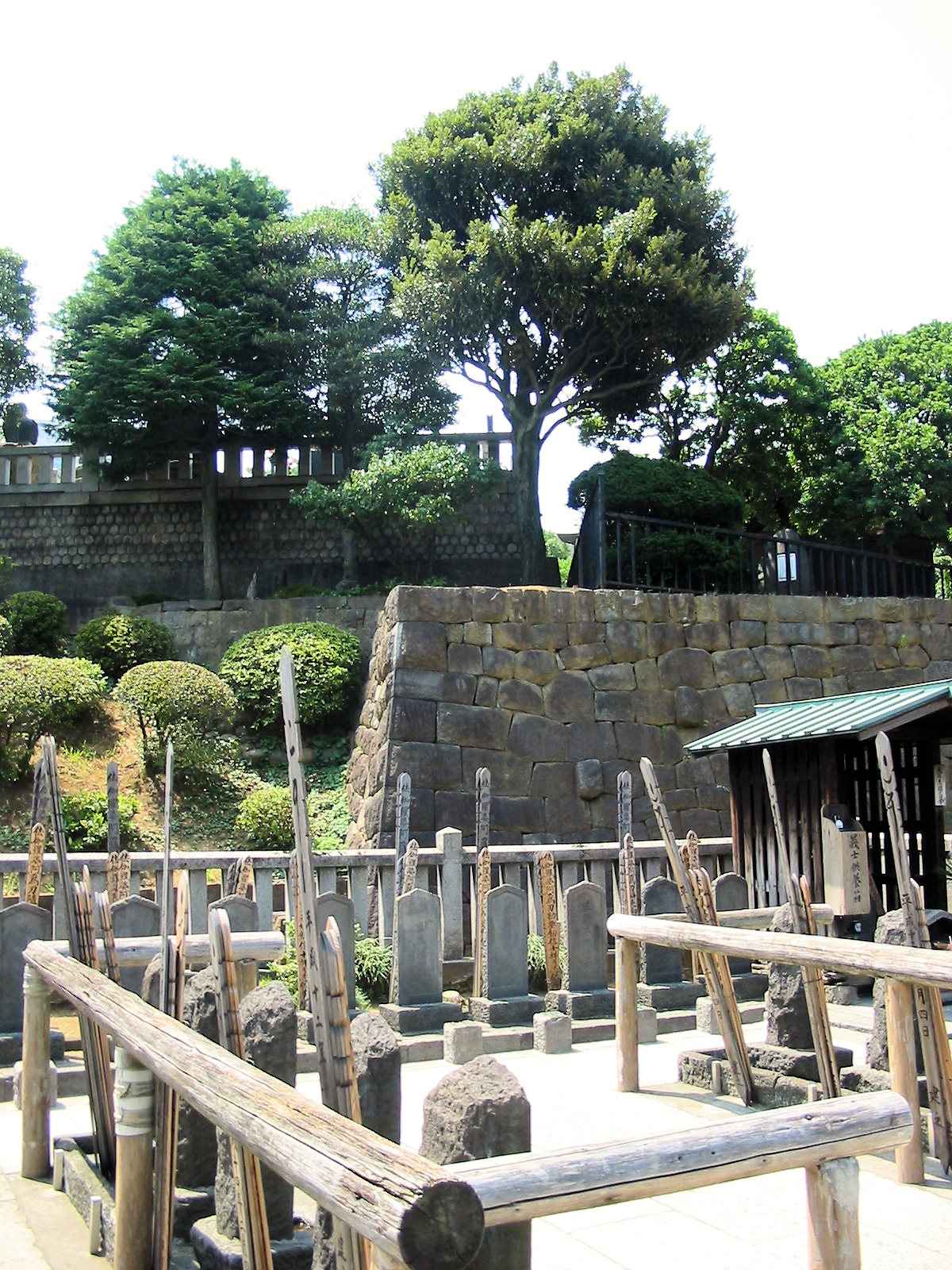
The tombs of the 47 ronin can be found a short distance from Shinagawa train station and Sengakuji tube station. The story of the 47 ronin is an integral part of the cultural identity of Japan.
We’ve been through it before. You go to a well known city, head to the sights we’ve heard of, and find about thousand other people there most likely infringing on you trying to take photographs.
In this post, I am going to point
you in the direction of two really interesting sights that little to no one
visit. The first is a place that epitomises the cultural identity of Japanese
and the second is taken from popular culture.
The tomb of the 47 Ronin
Japan’s greatest tale is the story of the 47 Ronin. This story
occurred in 1701 in Edo, the site of modern day Tokyo. Two shogun leaders
(daimyos) — Asano Naganori and Kamei Korechika — were tasked with organising a
reception for a representative of the Emperor of Japan.
A powerful government official named
Kira Yoshinaka took a dislike to the daimyos. The reason for the dislike is not
clear it was either because the samurai didn’t present him with enough gifts,
they didn’t offer bribes he wanted, or that he was just plain arrogant. Sort of
reminds you of a current world leader doesn’t it?
Kamei lost patience with Kira and
vowed to kill him for dishonouring the samurai but his consorts managed to
avert disaster and they appeased Kira with a very large bribe which led to
better treatment of Kamei by Kira.
But the poor treatment of Asano continued.
It got to the point where Kira uttered a serious insult to Asano which led to
the samurai attacking Kira in the palace and wounding his face.
The punishment for attacking a
shogunate official in the shogun palace was completely forbidden in the Edo
Palace. Asano was ordered to remove his smaller Katana blade and commit
seppuku, suicide in which the samurai takes his smaller blade and disembowels himself.
In the samurai world, an honourable death is by suicide.
The result was that the 300 samurai
whom Asano led were left leaderless or ronin. Out of that group, 47, led by
their leader Oishi, vowed revenge.
While revenge was forbidden, Kira’s
security protection was fortified which meant that the 47 ronin had to bide
their time before killing Kira.
The ronin went back to being farmers
while Oishi became an alcoholic, living in Kyoto brothels, and divorced his
wife (this was so no danger could come to her once they carried out their
attack).
In the meantime, Kira had spies
observing Oishi and once he appeared to have allowed alcohol to consume him,
the spies reported to Kira. It took two years for Oishi to be convinced that
Kira had let his guard down.
In early winter, Oishi and the rest
of the 47 ronin launched their attack on Kira in his Edo mansion. Two groups
laid siege to the mansion with Oishi leading one group and his son, Oishi
Chikara leading the other.
With consideration to Kira’s high
rank, Oishi knelt, addressed him with the highest respect, and told him that
they were here to avenge Asano’s death. Oishi offered Kira a samurai’s death or
for him to behead Kira in samurai tradition.
When Kira refused to respond, Oishi
ordered his men to hold down Kira while Oishi beheaded him. Oishi sent one of
the ronin the to Ako to announce the revenge was complete while the other ronin
marched to their master’s tomb in Sengakuji with Kira’s head. At the tomb, they
washed the head in a well and presented it and the dagger to Asano’s grave.
The shogunate had a dilemma: On one
hand, the samurai were correct to avenge the death of their leader, but on the
other hand, they killed a high ranking member of the shogunate. Despite support
from the people, the ronin were sentenced to death. The dilemma was resolved by
allowing the ronin to commit seppuku like their master.
They were buried in front of Master
Asano’s tomb.
Today, you can visit this sight.
It is a sight of great veneration and
honour among Japanese people. It is not a touristy sight. It is a place for
quiet reflection and to honour the legacy of these truly great men.
Just outside of the gleaming
ultramodern skyscrapers in the Shinagawa Ward of Tokyo is the Sengakuji temple.
It is located near the Sengakuji tube station on the Keikyu Line. Come out of
the station, turn right and cross the road and keep walking straight and you
will come to the temple. It is free to visit the tomb and you can pay a small
fee to see the museum which houses the clothing the 47 wore that night and a
copy of a receipt made for Kira’s employees who came to collect his head for
burial.
Horror house is eerie even in the daylight
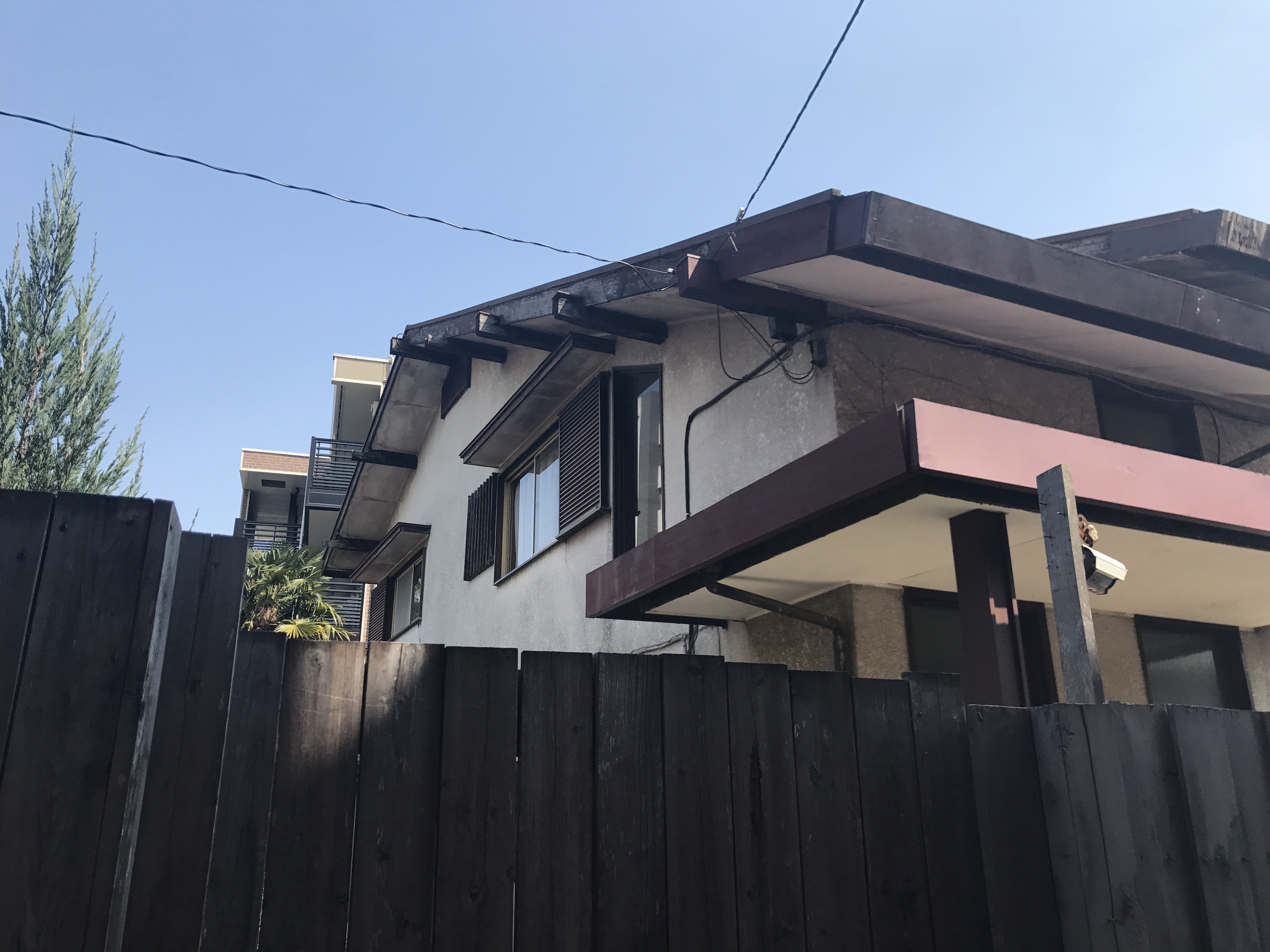
Fans of The Grudge will recognise this house as the Saeki House from the film series. It can be found about an hour away from central Tokyo.
Are you familiar with the film Ju-on: The Grudge? No, not the bad American remake. I’m talking about the Japanese original.
The plot is about a house haunted by
a ghost in a state of rage after the murder of a wife and child by a husband
who also committed suicide. In the film, everyone who comes into contact with
the home dies.
The house used in that movie is
located in Tokorozawa in Saitama about 45 minutes suburban train ride north of
Tokyo. You can travel to Tokorozawa station from Ikekebukoro station in Tokyo.
From the station, it is about a
five-minute walk through a street lined with restaurants and down some
alleyways.
If you are a horror film fan, it is
worth the journey.
In the film, the ghost of the little
boy, Toshio, is often accompanied by a cat. When I went to visit, as I turned
on to the lane the house is on, a black cat came running across the path.
So this concludes the Japan series.
I will continue to write other blogs about other places I have visited.
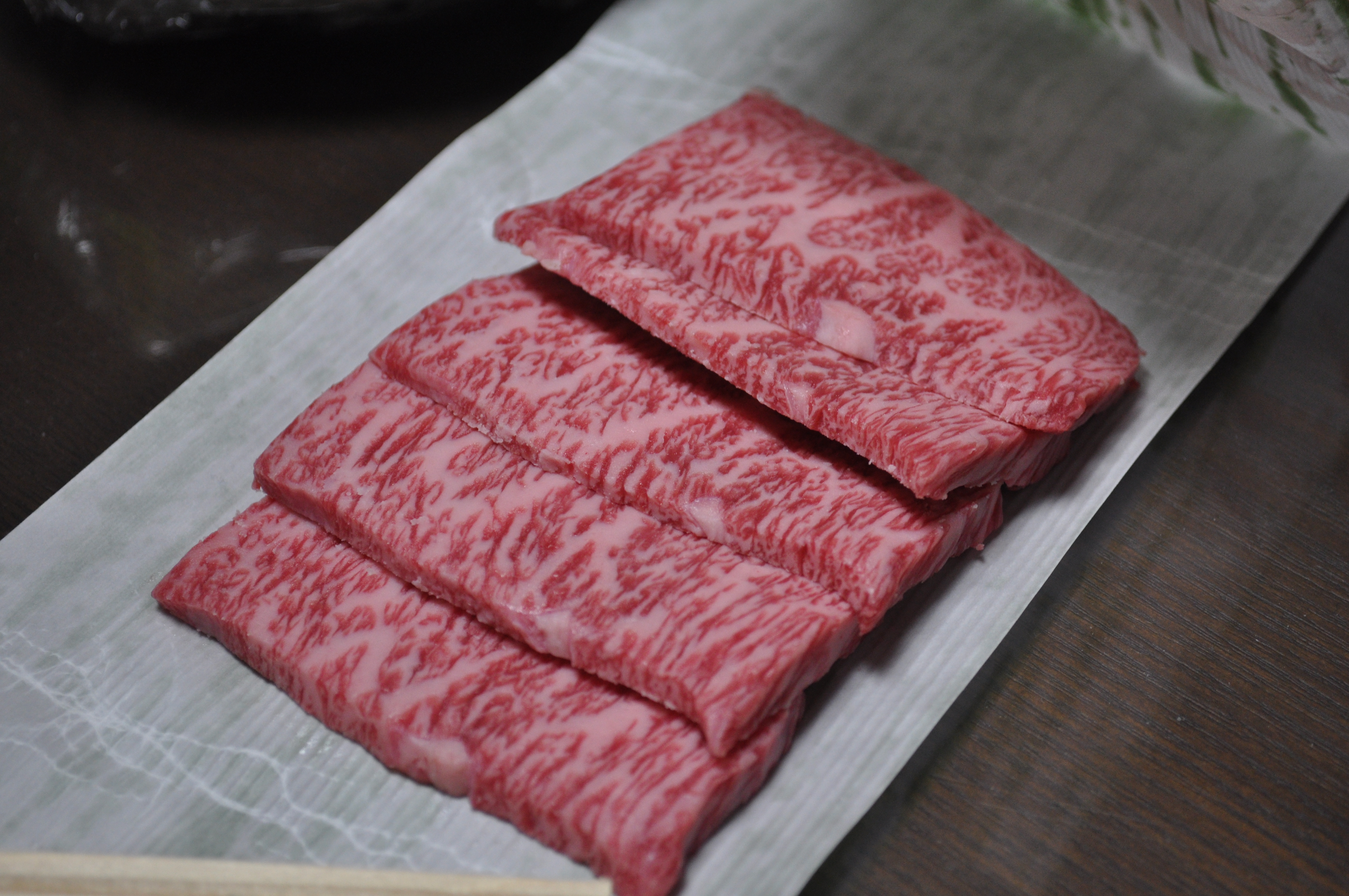
Matsusaka A5 Wagyu beef is the most expensive cut of steak you can find. No trip to Japan is complete without indulging in this rare cut of steak.
Another big expense you have to budget for in Japan is food. Japan has food option s ranging from a few pounds to thousands of pounds.
One of the things I do is change the
way I eat. I have my large meal at lunch because the lunch and dinner menus at
most restaurants are the same but the dinner menu is three times the price of
lunch.
Another option is the famous ramen
house or Izakaya.
An Izakaya is a Japanese pub that
provides food and alcohol. Don’t feel intimidated if all the signs and menus
are in Japanese, the people who go there or work there will help you make your
dining choices.
Prices in Izakayas tend to be quite
inexpensive and full of character.
There is one Izakaya in Tokyo that
you enter at your own risk. Bar Kagaya is run by Mark Kagaya and can be best
described as cross between a trip through Alice’s Wonderland and a scary puppet
show.
This YouTube clip will give you an idea of the madness that goes on in Bar Kagaya. If you are interested, call ahead for reservation because it fills up fast.
Be warned. This video is not for the feint of
heart.
Ramen houses are plentiful and the
food is great and filling. Two of the biggest chains in Japan are Afui and
Ippudo Ramen. But if you want a unique experience, try one or both of the world’s
only Michelin starred ramen restaurants.
Tsuta and Nakiryu have been awarded
Michelin stars and are extremely popular. Both are very small restaurants with
about 8 seats so you have keep a few things in mind when trying to get a seat.
Tsuta requires diners to come to the
restaurant near the Sugamo tube station between 7 and 8 a.m. to collect a
colour coded ticket. The ticket is acquired with a refundable 1,000 yen price.
The colour of the ticket corresponds to a one-hour window between 11 a.m. and 3
p.m. or 5 to 8 p.m. The restaurant is closed on Wednesdays. When you return at
your appointed time, you get your 1,000 yen back which you can use towards your
food. The signature bowl costs about 1200 yen or about £10 which is an
excellent bargain for a Michelin star restaurant.
Nakiryu is near Otsuka station and
is known for its Dan Dan spicy ramen. They are open 11:30 a.m. to 3 p.m. and 6
to 9 p.m. everyday and closed on Tuesdays. The process for getting a seat is
different from Tsuta. You need to get to the restaurant at about 10:30 a.m. and
get in line. If you get there at opening, you will be in line for a couple of
hours. The pricing is similar to Tsuta.
If you fall in love with Tsuta and
Nakiryu, and you will, you can buy instant noodles made by those chefs which
are available in convenience stores around Japan. The instant noodle version
costs about £4. While they aren’t as good as the real thing, they are a far
sight better than the £0.25 ramen you get in the UK.
7 Eleven, Lawson’s, Family Mart
Speaking of convenience stores, a great place for a cheap lunch or
dinner is a Japanese convenience store. The big three are 7 Eleven, Lawson’s,
and Family Mart. If you have ever been to a 7 Eleven in the U.S., you know all
they sell is high sugar drinks and bad fast food.
But convenience store food in Japan
is better than the prepared meals in supermarkets in England. You can get ramen
bowls, sushi, sandwiches, bento boxes, and noodles or rice dishes.
The stores have microwave oven so
you can warm up your food and take it back to your hotel. There are so many of
these shops that you aren’t far from one anywhere in Japan.
Each store has its specialty. 7
Eleven is known for its hot food and drinks. Lawson’s is best known for its
fried chicken, nuggets, and baked goods. Family Mart has a vast array of hot
and cold drinks.
Egg sandwiches are common to all and
are truly amazing. They are unlike any egg sandwich you have eaten before and
you will become addicted to them.
Lawson’s has a soft bun with
chocolate marbling. These are very addictive too. I have lost count of how many
egg sandwiches and chocolate marble buns I have eaten during my trips to Japan.
While all hotels have a kettle in
the rooms for tea which you can use to boil water for ramen, some also have
microwave ovens if you want to heat up food.
Here is an approximate breakdown of
a typical food day for me in Japan:
Breakfast: sandwich, pastry,
and drink: £5
Lunch: Typical Japanese fare:
£10
Dinner: ramen/bento box,
pastry, and drink: £7
From that
breakdown, I spend about £22 a day on most days. But that doesn’t mean you can’t
splurge on certain meals.
Thanks to the Olympic preparation in
Tokyo, the iconic Tsukiji fish market has shuttered. However, it has reopened
as the Toyosu Market about 2 km away in Tokyo’s Koto Ward with Shijomae Station
on the Yurikamone Line being the closest tube station.
The market is free to visit and open
to the public from 5 a.m. to 5 p.m. where you can try some of the freshest
sashimi you can find. Two iconic restaurants in Tsukiji have reopened in Toyosu.
Sushi Dai and Daiwa Sushi continue to serve up the best sashimi in the market.
Now here is the catch. Both
restaurants open from 5 a.m. to 2 p.m. Because they are both small restaurants
you will need to line up. If you get there after 7 a.m. you will be standing
around for a long time. When I went to Daiwa Sushi, I got there at about 5:30
a.m. and got in at just after 6 a.m.
The breakfast meal consists of eight
pieces of sashimi and one extra of your choice for about £25. Breakfast for
£25? Well, if you can find sashimi as fresh as what is served in Sushi Dai or
Daiwa Sushi in the west, you will probably spend at least 5 times that price.
Another splurge item in Japan is the
beef. Japanese beef is world renowned with Wagyu leading the way. Wagyu refers
to any of the four main breeds of beef cattle in Japan: Matsusaka, Kobe,
Mishima, and Omi.
Japanese beef is extremely expensive
because of the fatty marbling that leads to the most tender steak you will ever
eat. Marbling refers to the fat content in the beef. The more marbling the
better. The top grading for Wagyu beef is A5.
This is where the focus on lunch
comes in handy. At some of the top steakhouses in Japan, the lunch menu will
probably cost about £50 while dinner is closer to £200. Again, a Japanese Wagyu
steak on this side of the planet would be more than £200.
Now that we have covered food, I
will complete the series by pointing out two amazing sights in the Tokyo area
that most people never think to visit.
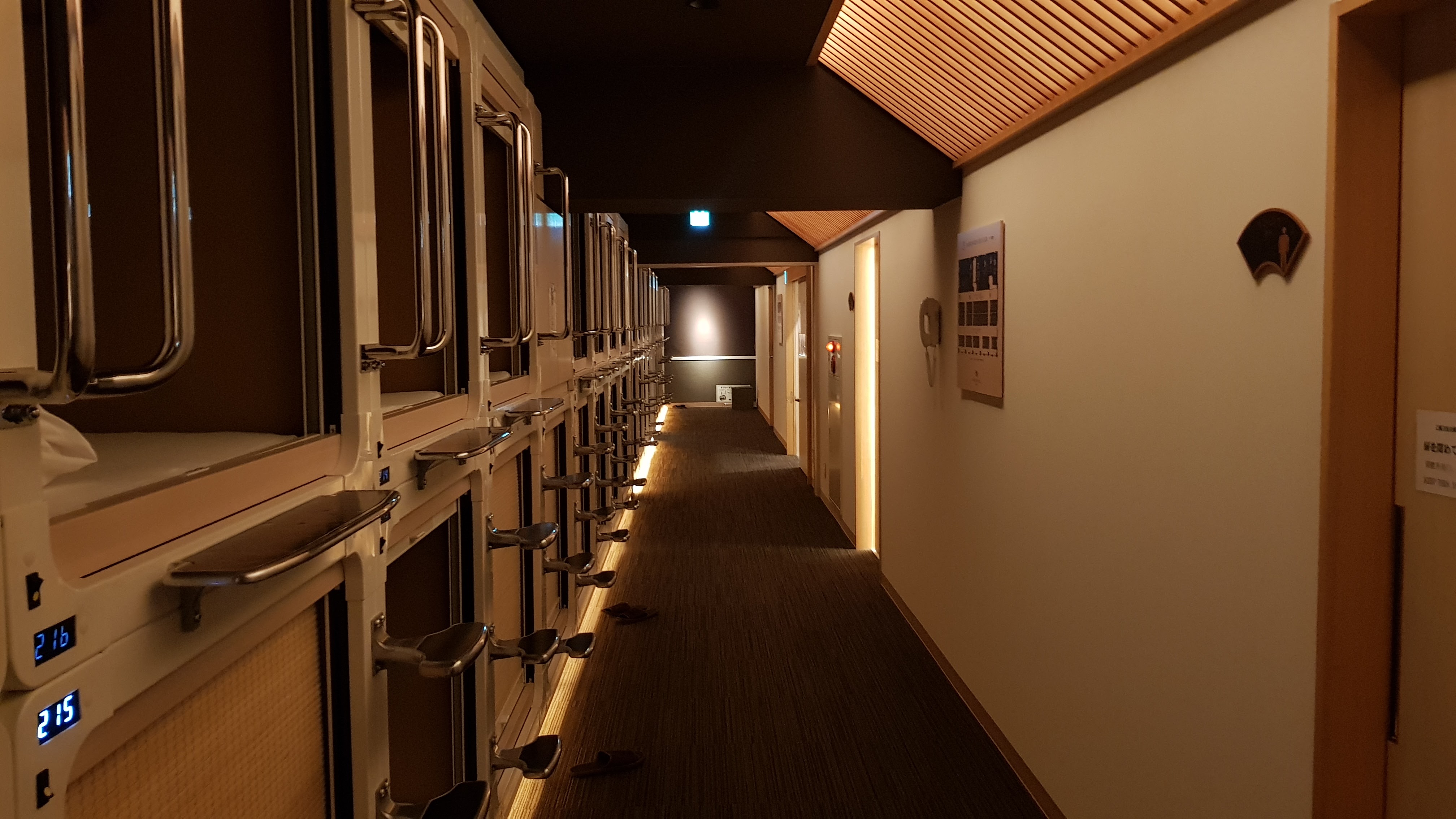
The famous capsule hotels are very cheap in Japan. While they aren’t a good option for your main hotel, they are good if you have an early morning flight or train.
Gadgets. We can’t live without our
smartphones, computers or tablets. We take them everywhere and we bury our
noses in them.
When travelling to Japan, your next
thought is on staying connected.
In Japan, you have two options: sim
card or a portable modem.
Sim cards are great if you have an
unlocked phone. You get a generous data plan to help you navigate your way
around the country.
Chances are, your phone plan does
not have an offer for travel in Japan which means you could be in for a nasty
surprise in your next phone bill.
The option I take is the portable
modem. You can either rent one online or pick one up at one of the many kiosks
in airports in Japan.
The JR Pass company I buy my
passes from also rents modems at a rate of approximately £40 for five days. You
just need to input your days in Japan and it will give you a price.
When you order your modem, you have
the option of picking it up at the airport or having it available for pick up
at your first hotel.
The best option is to pick it up at
the airport so you can get online to use Google Maps to navigate and find your
hotel.
A few days before you are due to
arrive in Japan, the company ships your modem to a pick up store in the
airport, usually located on the departures level.
The company will send you an email
with the tracking number which you present with your passport at the desk and
they hand you a package with your modem, charger, and a prepaid envelope for
when you are ready to return it.
You get an unlimited data plan but
it is throttled if you go over 1 Gb of data in a day. If you want to watch
Netflix, use the hotel’s wifi which is good enough for streaming.
On the back of the device is the
moden ID number and passcode you can input into your device to get online.
When it is time to return it, simply
put the modem and charger in the pouch and into the prepaid envelope and drop
it into any mailbox.
There is a mailbox in the departures
area of Japanese airports. Do not take it past security or passport control
because there aren’t any post boxes in that area. If you do, then you will have
to pay to courier it back to Japan and pay any overdue fee.
The modem signal is very good. The
only place I lost signal was in the Seikan Tunnel which is under the sea and
connects Hokkaido to Honshu Island in the north of Japan.
Suica or Pasmo?
Another handy product the JR Pass office offers is a Suica or Pasmo
card. Both are similar to the Oyster card on the London underground and can be
used to ride the Tokyo Subway and the Osaka Subway.
There is no difference between Suica
and Pasmo other than those being brand names. The other added bonus of the card
is that you can use them at vending machines around Japan to buy drinks or
food.
The price for one is £19 which is
added to the card so when it is posted to you, you have a topped up card. If
you get low on funds, go to any ticket machines at a subway station and top it
up. Don’t worry, the machines have an English language button to help you
complete the transaction.
Where to stay?
Like I said before, Japanese real estate is expensive. This is
magnified when checking out the prices for five-star hotels in Tokyo.
One night at the Shangri-La Tokyo
will cost you £600. Most five-star hotels will cost between £200 and £700 a
night.
The great thing about Japan is that
it is such a safe and clean country that three-star business hotels are better
than most four-star hotels in other countries and will cost about £50 a night.
APA and Toyoko Inn are two of the
largest business hotel chains in Japan. The APA is not without controversy. Its
CEO Toshio Motoya fancies himself an essayist and intellectual and writes books
that are placed in the rooms.
The writings are far right. His book
Theoretical Modern History: The Real
History of Japan is printed in English and Japanese and contains passages
that support his belief that the Nanking Massacre and the comfort women of Seoul
were not atrocities committed by Japanese soldiers during the Second World War.
Other than the book, the APA chain
is simply a hotel chain. No one foists extremist beliefs on you, but it is your
choice if you want to stay in a hotel managed by a far right conspiracy
theorist.
The drawback of business hotels is
that the rooms are tiny. You have room for a single bed, a desk, and a
bathroom. The tub is usually about half the size of a western bathtub and you
have little room for moving in the bathroom area.
One of the business hotels I stayed
in had paper-thin walls so you can hear people snoring in their rooms.
Another option for staying is the
famous capsule hotel.
Japanese people love to party, but
the public transit system closes at 1 a.m. The result is that many of the
Japanese salarymen opt to stay and party and then get some rest in a capsule
hotel.
These hotels are literally capsules
in which you sleep much like Bruce Willis’ room in The Fifth Element.
They are cheap (starting at £20 a
night), but they aren’t really conducive for long-term hotel stays. They work
in a pinch when you have an early flight or train and need to stay close to the
airport or train station.
The next option is the ryokan which
is Japanese guesthouse. These can be pricey, especially in the rural areas. The
prices are high because you get a large room with a futon and a full kaiseki
meal. Kaiseki is a form of Japanese fine dining that originated in Kyoto and
includes a variety of dishes. It is the epitome of high dining in Japan.
The final option is the ubiquitous
Japanese Love Hotel. I have not stayed in one of these but have seen YouTube
videos of them and they are quite interesting if you want to stay in a cheesy
hotel where couples go to, well, you get the picture.
Unfortunately, there is only one
night-train left so saving a night by taking a late train isn’t an option
unless you are going to the far south of Japan.
There you have it, a few more
options for you to consider to help you budget for your trip.
In the final blog in this series, I
will write about meal strategies to help you save money and give you tips on
sights that are off the beaten track in Tokyo including one very scary spot.
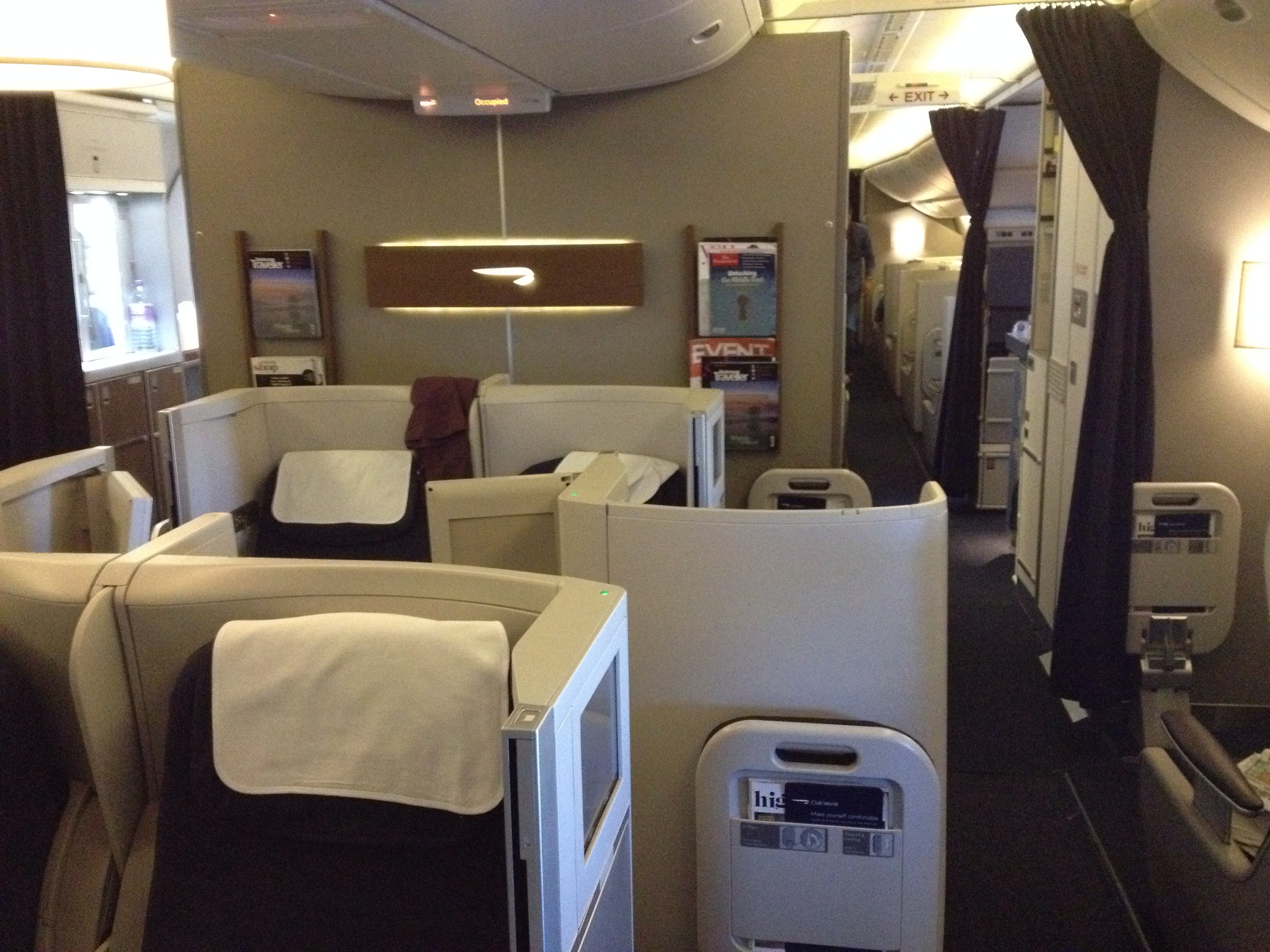
British Airways’ Boeing 777 business class is heavily criticised because of the complicated seating system where you have to step over other passengers to get into the aisles.
In this post, I will explore the economy
of scale of airline seats. Are premium class passengers bringing in more income
than those in economy.
For the purpose of this blog, I will
examine a four-class British Airways flight to New Delhi from London Heathrow.
To provide an understanding of
airline economics, I will set some parameters.
As an example, I checked a return
flight on British Airways between London Heathrow and New Delhi with a two-week
stay in Delhi.
British Airways operates two daily
flights and I chose the second flight which operates a Boeing 777-300 that can
hold 299 passengers with a configuration of 14 first class suites, 56 business
class suites, 44 premium economy seats, and 185 economy seats.
A full flight at the lowest price would
bring in £404,593.58.
If we break this down, the costs per
cabin are:
Economy Class: £127,727.70
Premium Economy: £47,054.48
Business Class £141,423.52
First Class: £88,387.88
On its own, a full business class
brings in more money than a full economy cabin. When we look at the premium
cabins that figure increases to £276,865.88, more than double the income that
economy class brings to British Airways.
Despite the fact that 62 percent of the seats on the plane are in economy class, the best service is reserved for the other 38 percent. This leads the chasm in quality service that exists on airplanes.
This is why seat technology in
economy class has not advanced as quickly as it has in premium cabins. While
some carriers opt for thinner seats in economy as a way of giving you an extra
inch or two of leg space, business class, for example, has progressed to
enclosed suites and excellent privacy measures.
But airlines do give you the
illusion that economy has improved vastly by giving you a menu when you get in
the plane. It’s fancy, but basically they still bring through the cart and ask
if you want the chicken or the pasta.
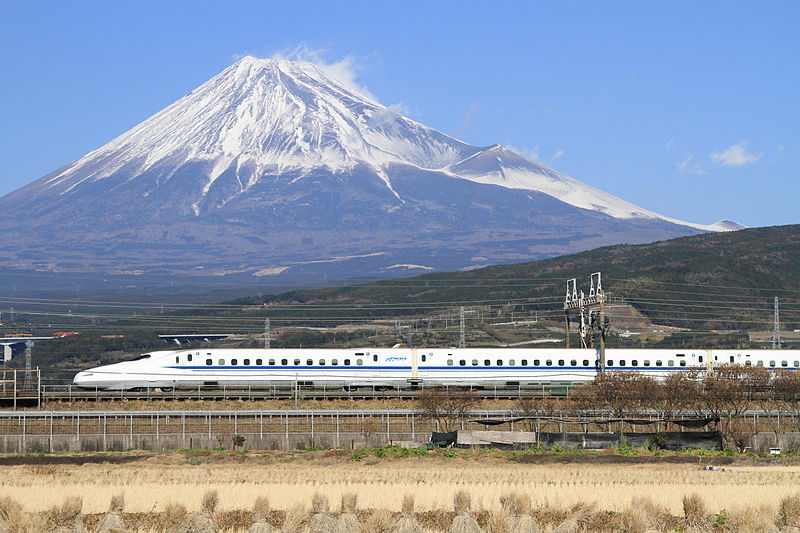
A Shinkansen train rockets by Mount Fuji on its way to southern Japan.
So now you have an itinerary in mind
and have booked your flights. You are firmly committed to your trip at this
point.
Up next is not hotel reservations,
but rail pass purchasing. Intercity travel in Japan — by land, air or rail — is
very expensive. You should invest in a Japan Rail Pass.
These passes are sold outside of
Japan to foreign nationals and cannot be purchased in Japan. JR Passes are
available in 7, 14, and 21-day packages and will cost you £211 (7-day pass),
£336 (14-day pass), and £430 (21-day pass).
You should consult the go-to
Japanese website for train prices and schedules, Hyperdia. This site allows you to plot
travel based on date, time, and train type.
To give you an idea of how valuable
the JR Rail Pass is, consider that a return train journey from Tokyo to Osaka
will cost you £200 if you bought a ticket in Japan. That is almost the price of
a 7-day rail pass.
Bear in mind, the JR Rail Pass
cannot be used on the superfast Nozomi Shinkansen trains that operate from
Tokyo to southern points. It is valid on the superfast north and westbound
trains, the Hyabusa and Kagayaki respectively.
What happens after you order a pass?
A few days after your purchase, an exchange order will be in your
post box. The exchange order is NOT a pass. You cannot arrive in Japan and
start using it. You will need to visit a JR Rail office where you can submit
the exchange order which will be processed into a rail pass.
Passes expire at midnight after the
last day. For example, a 7-day pass expires at midnight on 8 July if activated
anytime on 1 July. By this, I mean you can use your pass on 7 July until just
about midnight. After that, it will not work. The same idea works for the 14
and 21-day passes.
If your trip is going to be longer
than the pass you have, you may need to be a bit strategic, especially if you
flew into Narita and plan to use the Narita Express to the airport instead of
paying 3,500 yen for the ticket. For example, you have planned a 10-day journey
to Japan to visit Tokyo, Osaka, and Hiroshima which will put you in the country
from 1 to 10 July. If you flew into Narita and wanted to save 3500 yen and use
your pass on 10 July to get back to the airport, consider sightseeing in Tokyo
first and activating your pass on 3 July which will make the 7-day period end
on 10 July.
Another bonus with the JR Pass is
that you can use it for travel on the JR Yamanote line in the Tokyo Subway or
the Osaka Loop Line in Osaka. In both cities, most of the must-see sights are
within reasonable walking distance of stations on the lines.
Shinkansen trains travel at speeds of more than 275 km/h. It is possible to do Hiroshima in a day trip (800 km), but it would be a very long day.
Tips and tricks
Do not lose your pass. It
cannot be replaced and you will be stuck paying for train tickets if you lose
it.
The pass is valid not only on
the circle lines in Tokyo and Osaka, and the Shinkansen, it is valid on any
train system owned by Japanese Rail. You will know this if the service begins
with the letters JR.
If you choose to use the north
and westbound trains, seat reservations are mandatory. They are not mandatory
on the southbound trains but if your trip falls on a Japanese holiday, you may
need to if you don’t want to stand.
Go to any Shinkansen office in
the train stations and you can make your reservations. A perk of being a JR
Pass holder is that seat reservations are free.
When you reserve a seat, you
will receive a printed green card with your train letter and seat number on it.
If you look at train timetables in Japan, you will notice that trains tend not
to stop for more than a minute. Do not despair. The platforms have demarcations
that tell you where to stand if you have a reservation. Trains normally run
with 7 or 9 carriages. So you will see demarcations for 7 and 9-carriage
trains. Signs will tell you where your train car will stop and you can line up
in the demarked zone. It makes boarding very efficient and the quick stop is
not an issue at all.
Unlike English trains that have
luggage racks, Shinkansens and other trains in Japan do not have them. But the
overhead rack is sturdy enough to hold a large suitcase. You can place your
bags there.
Train tickets and passes are
available in standard and first class. There is no need to splurge on first
class unless you want a carpeted carriage and a plusher seat. Legroom in
standard is about two to three times of standard in British trains. You have
enough room to sore a suitcase at your feet and still be comfortable.
The seating arrangement on
standard class Shinkansen carriages is 3 on the left side and 2 on the right. If
you are travelling in groups, it is possible to spin one set of seats around so
everyone can face each other.
TIP: If you are travelling
south from the Tokyo region, try to get a seat reservation on the right side of
the train. About 40-45 minutes outside of Tokyo, you will have a glorious view
of Mount Fuji. These seats tend to sell out quickly so if you are efficient try
to book them a few days ahead of your journey.
Etiquette, food, and drinking
Japan is a country that is built on order, conformity and
politeness. While no Japanese person will yell at you for social faux pas, they
will judge you with their stares. Here are a few things to consider:
It is perfectly OK to eat and
drink on the trains. In fact, every station has many food stalls serving
prepared foods. One of the most popular is the eki-ben. Eki is the Japanese
word for station while ben is the abbreviation of Bento Box. So an Eki-ben is a
Bento Box you can buy in the station and enjoy on the train as you watch the
countryside whiz by at speeds of more than 275 km/h.
Japan is a clean society so
remember to take your rubbish with you when you leave the train. There are
rubbish bins on the platforms so you can get rid of your garbage there.
It is considered rude to chat
on your mobile in the seating areas. Go to either end between the carriages if
you need to use the phone.
In the next section, I will write
about accommodations which can be a challenge considering Tokyo is among the
world’s most expensive cities. I will introduce you to capsule hotels, business
hotels, and ryokan hotels.

 Taking the road best travelled