Gadgets. We can’t live without our smartphones, computers or tablets. We take them everywhere and we bury our noses in them.
When travelling to Japan, your next thought is on staying connected.
In Japan, you have two options: sim card or a portable modem.
Sim cards are great if you have an unlocked phone. You get a generous data plan to help you navigate your way around the country.
Chances are, your phone plan does not have an offer for travel in Japan which means you could be in for a nasty surprise in your next phone bill.
The option I take is the portable modem. You can either rent one online or pick one up at one of the many kiosks in airports in Japan.
The JR Pass company I buy my passes from also rents modems at a rate of approximately £40 for five days. You just need to input your days in Japan and it will give you a price.
When you order your modem, you have the option of picking it up at the airport or having it available for pick up at your first hotel.
The best option is to pick it up at the airport so you can get online to use Google Maps to navigate and find your hotel.
A few days before you are due to arrive in Japan, the company ships your modem to a pick up store in the airport, usually located on the departures level.
The company will send you an email with the tracking number which you present with your passport at the desk and they hand you a package with your modem, charger, and a prepaid envelope for when you are ready to return it.
You get an unlimited data plan but it is throttled if you go over 1 Gb of data in a day. If you want to watch Netflix, use the hotel’s wifi which is good enough for streaming.
On the back of the device is the moden ID number and passcode you can input into your device to get online.
When it is time to return it, simply put the modem and charger in the pouch and into the prepaid envelope and drop it into any mailbox.
There is a mailbox in the departures area of Japanese airports. Do not take it past security or passport control because there aren’t any post boxes in that area. If you do, then you will have to pay to courier it back to Japan and pay any overdue fee.
The modem signal is very good. The only place I lost signal was in the Seikan Tunnel which is under the sea and connects Hokkaido to Honshu Island in the north of Japan.
Suica or Pasmo?
Another handy product the JR Pass office offers is a Suica or Pasmo card. Both are similar to the Oyster card on the London underground and can be used to ride the Tokyo Subway and the Osaka Subway.
There is no difference between Suica and Pasmo other than those being brand names. The other added bonus of the card is that you can use them at vending machines around Japan to buy drinks or food.
The price for one is £19 which is added to the card so when it is posted to you, you have a topped up card. If you get low on funds, go to any ticket machines at a subway station and top it up. Don’t worry, the machines have an English language button to help you complete the transaction.
Where to stay?
Like I said before, Japanese real estate is expensive. This is magnified when checking out the prices for five-star hotels in Tokyo.
One night at the Shangri-La Tokyo will cost you £600. Most five-star hotels will cost between £200 and £700 a night.
The great thing about Japan is that it is such a safe and clean country that three-star business hotels are better than most four-star hotels in other countries and will cost about £50 a night.
APA and Toyoko Inn are two of the largest business hotel chains in Japan. The APA is not without controversy. Its CEO Toshio Motoya fancies himself an essayist and intellectual and writes books that are placed in the rooms.
The writings are far right. His book Theoretical Modern History: The Real History of Japan is printed in English and Japanese and contains passages that support his belief that the Nanking Massacre and the comfort women of Seoul were not atrocities committed by Japanese soldiers during the Second World War.
Other than the book, the APA chain is simply a hotel chain. No one foists extremist beliefs on you, but it is your choice if you want to stay in a hotel managed by a far right conspiracy theorist.
The drawback of business hotels is that the rooms are tiny. You have room for a single bed, a desk, and a bathroom. The tub is usually about half the size of a western bathtub and you have little room for moving in the bathroom area.
One of the business hotels I stayed in had paper-thin walls so you can hear people snoring in their rooms.
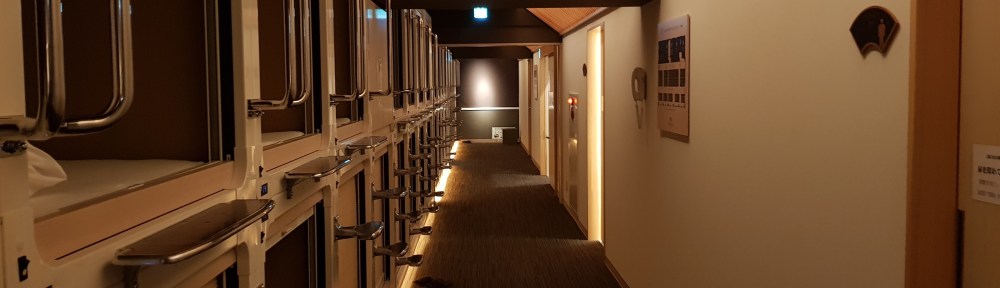
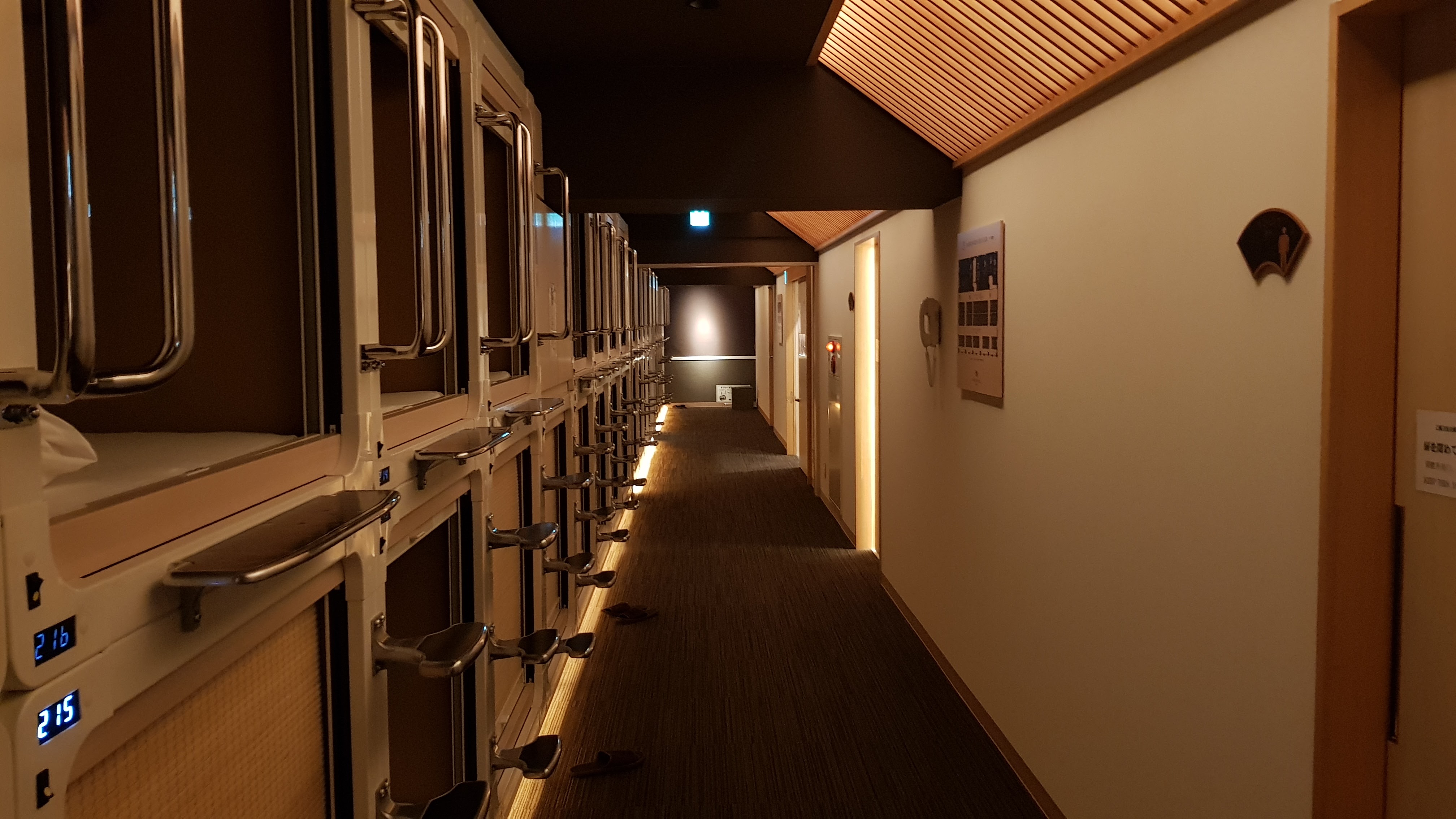
Another option for staying is the famous capsule hotel.
Japanese people love to party, but the public transit system closes at 1 a.m. The result is that many of the Japanese salarymen opt to stay and party and then get some rest in a capsule hotel.
These hotels are literally capsules in which you sleep much like Bruce Willis’ room in The Fifth Element.
They are cheap (starting at £20 a night), but they aren’t really conducive for long-term hotel stays. They work in a pinch when you have an early flight or train and need to stay close to the airport or train station.
The next option is the ryokan which is Japanese guesthouse. These can be pricey, especially in the rural areas. The prices are high because you get a large room with a futon and a full kaiseki meal. Kaiseki is a form of Japanese fine dining that originated in Kyoto and includes a variety of dishes. It is the epitome of high dining in Japan.
The final option is the ubiquitous Japanese Love Hotel. I have not stayed in one of these but have seen YouTube videos of them and they are quite interesting if you want to stay in a cheesy hotel where couples go to, well, you get the picture.
Unfortunately, there is only one night-train left so saving a night by taking a late train isn’t an option unless you are going to the far south of Japan.
There you have it, a few more options for you to consider to help you budget for your trip.
In the final blog in this series, I will write about meal strategies to help you save money and give you tips on sights that are off the beaten track in Tokyo including one very scary spot.
 Taking the road best travelled