One of the most visited countries in the world is India. It offers mystery, folklore, ancient civilisations, cuisine, and so much more. For my next blog series, I will focus on India as a traveller’s dream.
I will go from the perspective of creating a bespoke holiday because, unless you are a very savvy traveller, you will need help navigating India’s bustling streets, overflowing infrastructure, and the culture shock.
This is based on my Indian journey in 2011 which I took with my parents and a family friend. At the time, I was still living in Canada when I planned this journey.
Best time to go
We decided the best time to go would be in October around the Canadian Thanksgiving. It was not quite high season in India which meant prices would be a bit cheaper than a few weeks later. The high season in India tends to be late October to mid-March when the temperatures begin to rise into the 40s. This is when most people will visit India when it is “pleasant” in the 30s.
Air travel
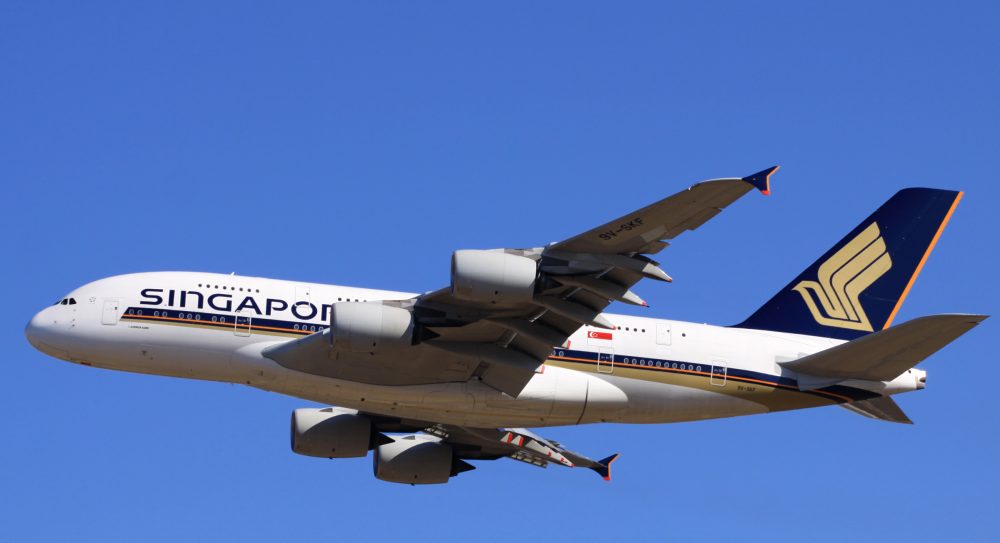
I had been reading all about how great Emirates Airlines were back in those days. They had made air travel great again (wink, wink). At the time, they were beginning to roll out their superjumbo Airbus A380 on several routes, but they were still flying the Boeing 777 to Toronto. So, we decided to fly with them though Manchester and to include a short visit with my sister and see the babies Jasmine and Oscar.
We decided to fly business class on this flight which, at the time, was very reasonable. This was when Emirates was undercutting the competition by offering fares competitors couldn’t match. Now, they offer high fares and their service suffers greatly. A perk of flying Emirates business class is the chauffeur drive programme where they send a car to pick you up. In the Manchester area, it is a 50-mile radius which meant Sheffield was well within the zone.
Entry into India
For this one, I did a lot of homework at night to try and understand how the optimise our time in India. The vast majority of people who go to India will need a visa. So I started looking into the process which required filling out an online form, printing it, taking it and your passport to an office and getting your passport and visa back in about two weeks. Today, it is much simpler with an e-Visa where you buy the visa online, print the PDF, and carry it with you. It usually takes a few hours to get an e-Visa.
Researching
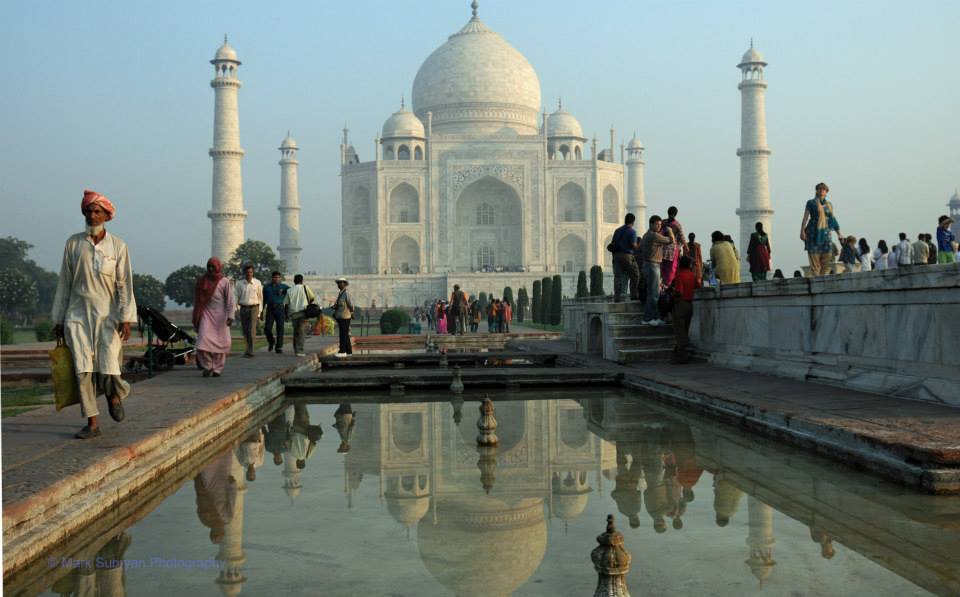
Based on my research, I knew that India was way too big to see in a three-week trip and that I would have to limit it to a region or two. With life, we have no guarantees which means seeing the most iconic areas on your first trip. That meant including the Golden Triangle (Delhi, Agra, and Jaipur) on this trip. The vast majority of people who visit India will visit this region first. What you do beyond that makes your trip special.
I also felt that we should visit the former colonial capital of Kolkata, as well as the northern Islamic city of Lucknow on our trip. Because my grandfather was a practising Hindu, we felt Varanasi should be put on the trip.
So now with Delhi, Agra, Jaipur, Kolkata, Lucknow, and Varanasi in mind, we had the skeleton of a trip and I started to look at suggested itineraries that people have posted on Lonely Planet, Tripadvisor, and other travel websites. I kept seeing people talk about certain travel companies that specialise in Indian tours that will put together a formal trip with hotels and internal transportation. I chose the British-based company Cox and Kings for advice on the trip. Other companies that are very reputable that would provide similar services include Greaves India, an American and British-based company that we used on our second trip to India; Kuoni, a British agency with offices across the country, and; Wild Frontiers, based in London.
These operators have people who are experts on the areas you are interested in visiting who work exclusively with Indian tour operators, are very familiar with India, and will ensure that your holiday is exactly what you wanted.
Basically, I worked with a dedicated tour agent to fill in the blanks on my skeleton plant. He advised four additional places that would help create a smooth transition especialy because this trip was from the east to central Indian. He added in Khajuraho, Orchha, Ranthambhore National Park, and Ramathra Fort.
Khajuraho is the site of several ancient temples similar to what you would see at Angkor Wat in Cambodia. It is a very small village that is only known for the temples which means an overnight stay is all you need. We flew into Khajuraho from Varanasi and made our way through the rest of the trip by van from Khajuraho.
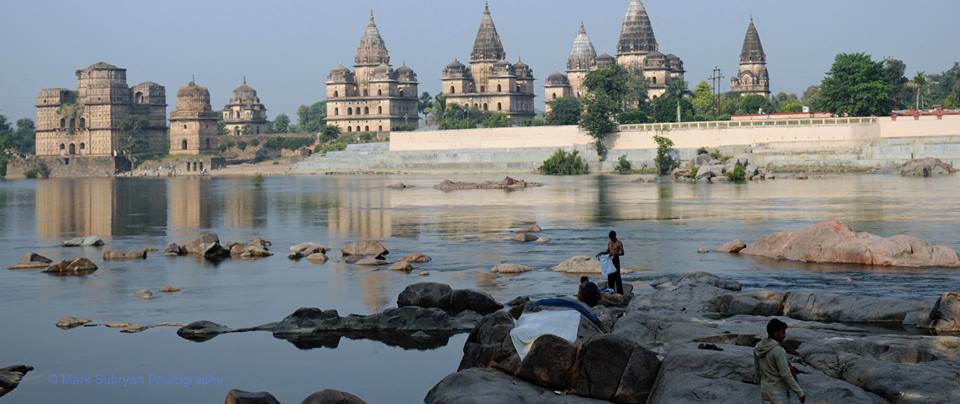
Orchha is a medieval town in Madhya Pradesh. It is best known for for its fort. We stayed for two nights at the Amar Mahal, a small hotel laid out like an Indian palace with views overlooking the town below.
Ranthambhore National Park is in Sawai Madhopur in Rajasthan and a tiger reserve. It is one of the few places in the world where you can view Bengal tigers in the wild — if they are out. They tend to hide away in the foliage. We stayed at the Vivanta by Taj Sawai Madhopur which is a five-star hotel that used to be a hunting lodge. Getting up at 5 a.m. having a snack of biscuits and tea or coffee before climbing on board a jeep and trekking into the forests transports you back to the days of the Raj and gives you an idea of what it might have been like to be in that era.
My favourite was Ramathra Fort. It is a place that, unless you know about it, you probably won’t even know it’s there. Ramathra Fort is in Karauli, Rajasthan, about 200 km south of the Agra to Jaipur highway. The further off the beaten track you get the more rugged the drive until you come to a part where one gravel lane serves two directions of traffic. Imagine a heavy goods truck and a small van trying to get by each other with 20-foot dead drops on their side of the road. But the journey is is worth it when you arrive at the Fort which is a hotel with two suites and eight luxury tents, when you climb up on the rampart wall, look out at the mustard fields and see no one. Other than the sounds of animals around you, it is peace and quiet which is even more amazing when you consider that just north of you is that Golden Triangle with millions and millions of people, bustling traffic, and non-stop activity.
Tips for planning India
- India is one of the places I would recommend you do not cut costs;
- Five-star hotels in India are not that expensive. You can find great hotels in the five-star range from less than £100 per night.
- Northern India is very different from Southern India which I will get to in the next post. Where the south is more laid back, you will be inundated by beggars and touts in the north and they are relentless. In fact, when they approach you, you shouldn’t even look at them much less say anything. “No or no thank you” does not work with them.
- A combination of transport types will allow you to experience India in dfferent ways. We did flights, train, and road travel.
- Always remember to drink bottled water. You should use it to brush your teeth as well. Caution is a good thing.
- Remember to consult a travel clinic before you leave to make sure you have your inoculations.
- Go vegetarian for the first few days of your trip to ease the Delhi belly.
- Avoid street food as much as you can. See previous point.
- Accept that your tour operator in India, tour guide, tour manager, driver, etc., make a fixed small wage and top up their pay with commissions. This means you will be taken to clothing shops, souvenir shops, perfumeries, etc. to buy things. Every purchase you make means a commission for them.
- Tipping can be almost as expensive as your journey when you consider that you will have to tip your tour manager, tour guide, driver, and driver’s assistant. Rule of thumb is that the tour manager gets about £10 to £20, your tour guide gets about £8 per day per adult on the tour, £10 per adult per day goes to your driver, and £2 per adult per day to your driver’s assistant.
In Part 2, I will outline the planning for the second journey to India which I did in 2013. Subsequent parts of the series will outline various places I visited and which are highly recommended.
 Taking the road best travelled