How much extra-curricular research
do you do when booking airfares? By paying attention to news, you can alleviate
any heartaches down the road.
For example, my flight to Thailand
was on Qatar Airways. While all appears well with Qatar, which recently was
named, World’s Best Airline, geopolitics threatens the airline.
In 2017, Saudi Arabia, the UAE, and
Bahrain led a blockade of Qatar because they accused the Gulf State of
financing Islamic extremists in the region. This blockade means no access from
Qatar to the three countries by land, sea, or air.
It also means that airlines
registered in Qatar, such as Qatar Airways, are not allowed in Saudi or Emirati
airspace. They are allowed two routes in Bahraini airspace because Bahrain’s
airspace starts in front of Qatar.
This forces Qatar Airways to fly
their planes over Iranian airspace.
Recent developments in which America’s
amateur president has chosen Iran as his focus on the month (it changes all the
time), this has led to a no-fly notice by the American Federal Aviation
Association. However, Qatar Airways has no choice but to ignore the warning.
Add to this the fact that Pakistani
airspace remains closed after they and India were on the brink of war earlier
this year and Qatar really has very few options for the start and end of their
flights into and out of Doha Hamad Airport.
Unhappy unions mean strikes
Another consideration is for the labour situation at airlines. Today’s
early signs of labour unrest are tomorrow’s strikes.
I always double check the latest
news developments on airlines’ labour news. The last thing you want is to find
out the airline staff is on strike just as you are about to travel. It means
headaches as you try to sort out alternative arrangements for your travel
plans.
On my flights, I didn’t need to
check this information because Scandinavian Air Service (Manchester to
Stockholm) recently ended a strike last month so I knew it would be highly
unlikely there would be another strike. I also knew that Qatar Airways does not
allow its staff to unionise.
How financially healthy is your airline of choice?
In the past year alone, Monarch (UK), Wow Air (Iceland), Jet Airways
(India), and Primera (Denmark) have all shut down operations.
The toughest part is that you have
no recourse for refund if an airline goes out of business. If you are on your
holiday, then you either have to hope your government will charter flights to
repatriate stranded passengers or other airlines are in a generous mood to
offer you discounted fares. Otherwise, you will fork over a lot of money for a
new ticket home.
A quick Google News search will help
you find out these types of information before you book your flights. A little
extra planning now means a seamless experience when you travel. Well, other
than the usual delays on the day of travel.
The Motorcycle Diaries is a classic film about Che Guevara’s path to enlightenment.
A source of inspiration for our
travel ideas come from cinema. Hollywood and beyond have made an industry of
making road movies that inspire us to travel. Here are my top 5.
5. Lost in Translation (2003): Bill Murray, Scarlett
Johansson
Sofia Coppola’s critically acclaimed
movie follows the path of an aging actor (Bill Murray) who has been contracted
to star in adverts for Suntory, a Japanese drinks company. In Japan, the actor
crosses paths with a bored wife (Scarlett Johansson) whose is in Tokyo because
her husband is working as a photographer. Key sights in the film: Tokyo,
Daikanyama, Shinjuku Park Tower, Grand Hyatt Tokyo.
4. Easy Rider (1969): Dennis Hopper, Peter Fonda, Jack
Nicholson
This road movie sees two bikers
drive across the U.S. from Los Angeles to New Orleans. The film’s true star is
the desert landscapes and towns the pair (Hopper and Fonda) ride through on a
drug-fuelled hippie trip across America.
3. Lost Horizon (1937): Ronald Coleman, Jane Wyatt
Lost Horizon is the film adaptation
of Jame’s Hilton’s 1933 novel about a group of plane crash survivors who landed
in the mythical valley of Shangri-La, a valley deep in the Himalayan mountain
range. The key sights in this film are the Gilgit and Skardu regions of
Pakistan.
2. The Darjeeling Limited (2007): Owen Wilson, Adrien
Brody
One year after their father’s death,
three brothers unite to take a train trip across India to try and
re-established their tattered relationship. The film takes the viewer across
India on a fantastical journey through barren landscapes and mountain regions. The
film takes the viewer through Jodhpur and the Himalayas.
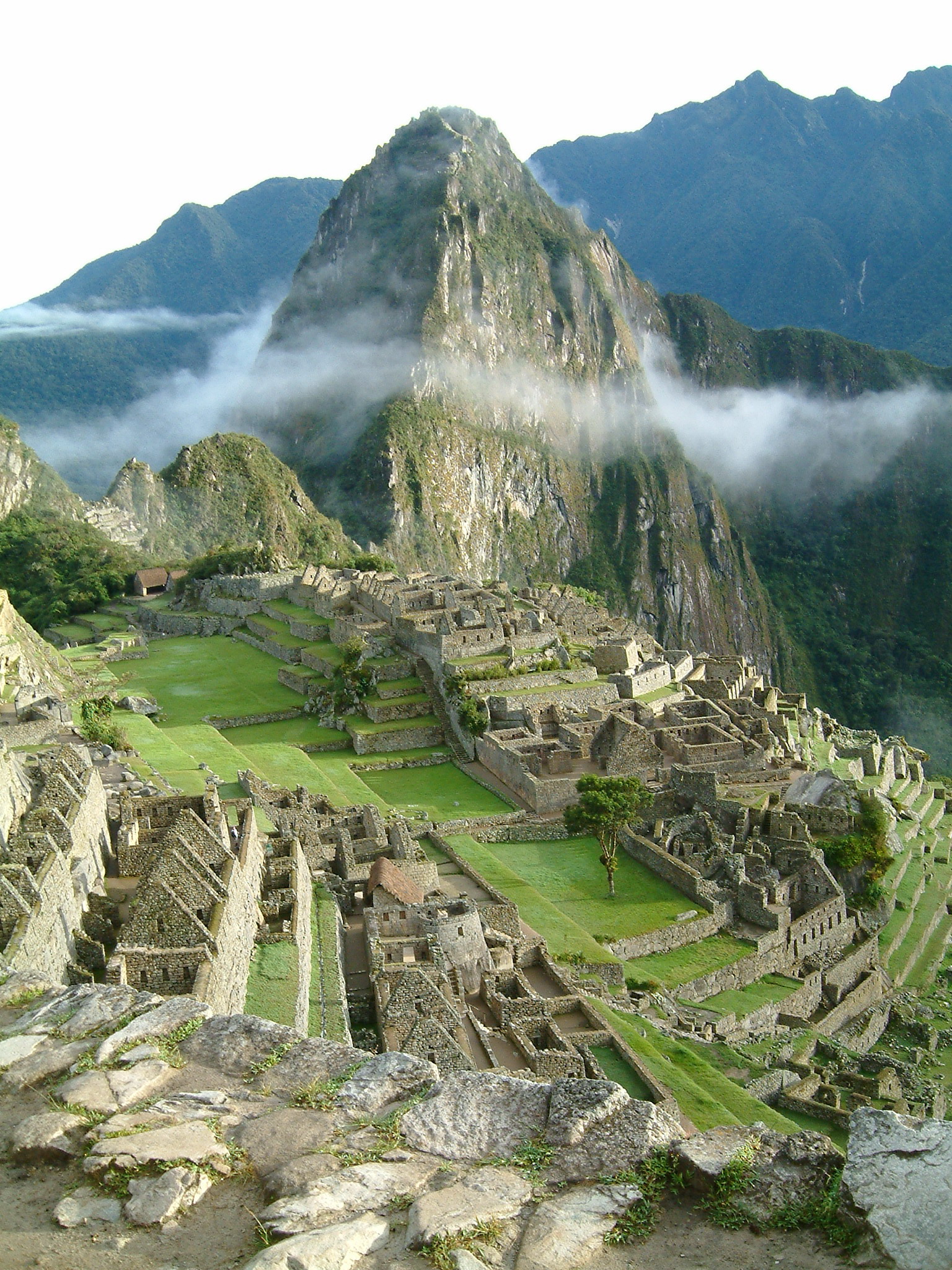
1. The Motorcycle Diaries (2004): Gael Garcia Bernal
I have written about this movies previously.
The film is two types of road trip: a literal one across South America and a
figurative one as Che Guevara begins to form the foundation of his
transformation from middle class citizen to revolutionary. The sights on
display in this film include the Andes, Buenos Aires, Caracas, Machu Picchu,
and the Atacama desert.
The Bara Imambara complex is a tribute to the Mughal architecture brought to the area by the Awadhis.
About a 90-minute journey by air
from Kolkata, we come to the city of Lucknow, capital of Uttar Pradesh and the
home of the Awadh culture.
Lucknow is the northern Islamic city
in India which has a rich culture and a deep history. The art, cuisine, dance,
and music of North India can trace its roots to the Awadhi culture. It was the
site of the 1857 First War of Independence from the British. The Lucknow
Residency, which housed the British Raj in the city, still bears evidence of
that first battle with pock-marked buildings where cannon fire hit the walls.
Getting in
From air, you can arrive in Lucknow at Chaudhry Charan Singh Airport
with flights from Kolkata, Mumbai, Delhi, and other major Indian cities. Flydubai
(Dubai), Oman Air (Muscat), Saudia (Jeddah, Riyadh), and Thai (Bangkok) fly to
international destinations.
By rail, Lucknow Train Station is an
important one with trains from the capital through to the northeast. Allahabad,
the location of the Kumbh Mela the largest gathering of people on the earth,
lies on this train line.
Sightseeing
The Awahdi culture gives way to many significant Islamic sites in
Lucknow. Key is Bara Imambara complex which is an impressive tribute to Mughal
architecture that was built in the late 1700s. The complex includes the Chhota
Imambara, a mausoleum built for the third Nawab of Awadh in 1837. Foreigners
must pay 500 rupees (£6) to enter the complex.
La Martineriere College is a
boarding school with a rich history. The boys school started in 1845 while the
girls school opened in 1865. La Martiniere is the only school in the world to
have been awarded battle honours for its part in the defence of Lucknow during
the war in 1857. While you cannot really go into the school, you can walk the
school grounds and the outside hallways which go by the classrooms The children
are well disciplined and will stop to greet you as you walk by their
classrooms.
Gomti Riverfront Park is another
nice place to go for a wander near Gomti Nagar. Concerts are held in the park
some evenings. This is a great place to see some spectacular sunsets.
Where to stay
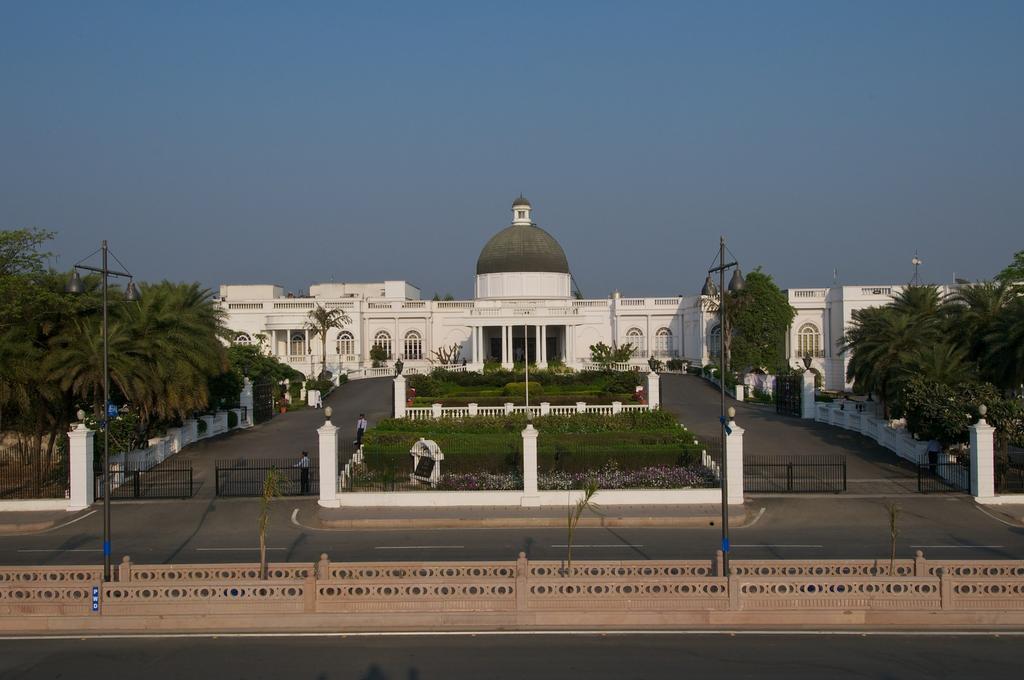
The Taj Mahal Lucknow is a majestic hotel highlighted by the domed tower than sits atop the reception area. In the back of the complex is a large swimming pool and rest area.
On this trip, we stayed at the Taj Mahal Lucknow which is a colonial
building on 10 hectares of land with a domed tower over the reception area. The
in the offseason and shoulder season, a two-night stay costs about £180 and
£300 in the high season. The Taj Mahal has two restaurants with the Oudhyana
serving traditional Awadhi cuisine which has four dining options: a la carte
menu, Awadh Dastarkhawanse which is a selection of small plates, Ganga-Jamuni
Zayeka which is mixture of contemporary and traditional tastes, and the put
your hands in the hands of the chef where you leave it to the chef to create
your dining experience based on the ingredients in the kitchen and what is at
its freshest.
One of the things you will find is
that you tend to eat many of your meals at your hotel. If you stay at a
five-star or four-star hotel, these are most likely where the best restaurants
in town will be found. Prices in these restaurants tend to be slightly cheaper
than Indian cuisine in your home country but vastly more expensive that in
India. Chances are you tour guide will take you to a tourist-oriented
restaurant for lunch where prices are much lower but it is still a somewhat
sanitised experience as you are eating in a restaurant filled with other
tourists. The reason is that your tour guide wants you to spend your time
seeing the country rather than doing a toilet tour of India. The one time you
do get a more authentic experience is on the roads when you stop at truck stops
or roadside restaurants where it is the locals who dominate the landscape.
Safety:
Lucknow is a very safe country and you will be unlikely to encounter
problems. The usual warnings do exist such as being aware of your surroundings.
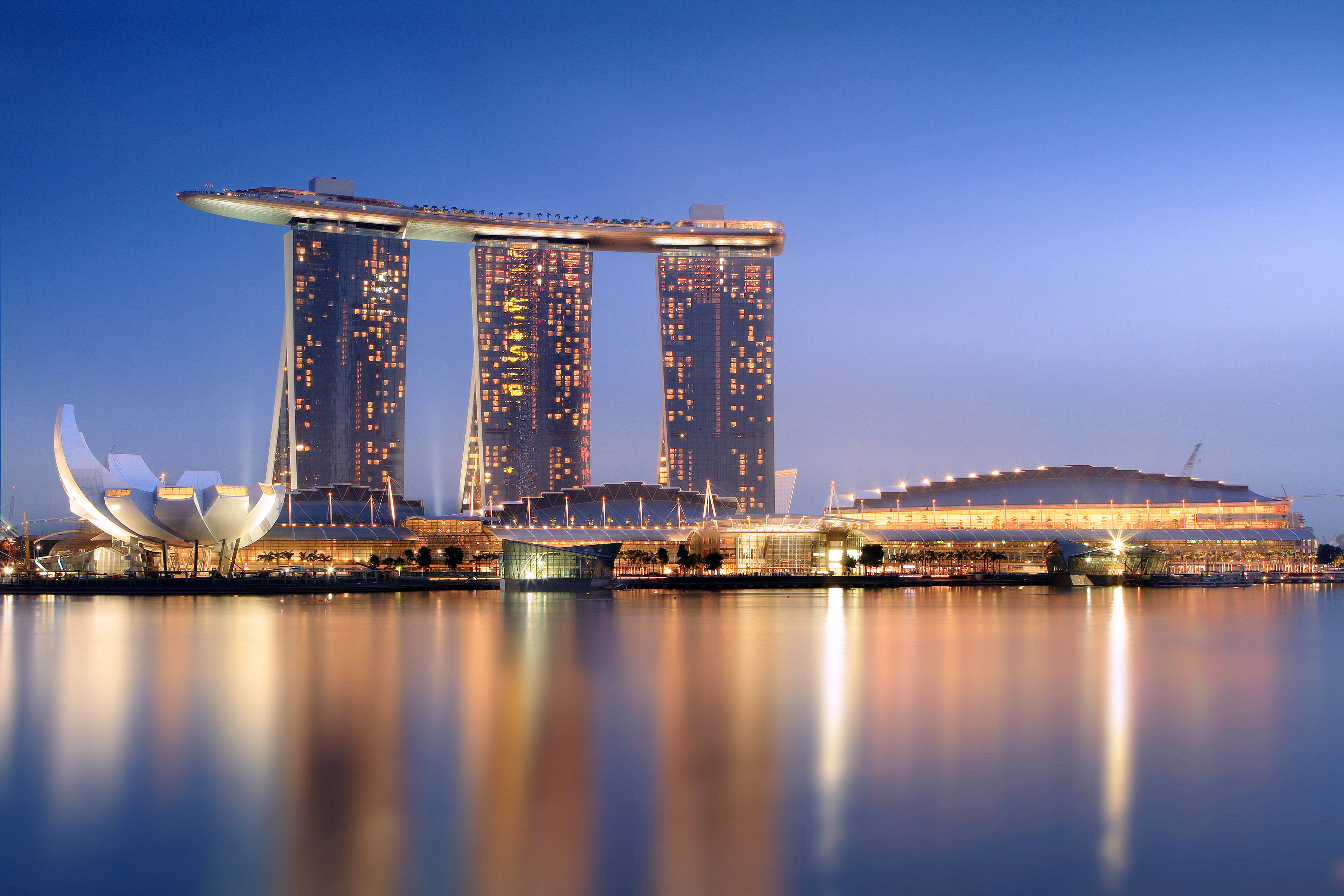
The iconic Marina Bay Sands hotel complex dominates the Singaporean skyline. The complex is a popular tourist destination.
One of the jewels in the Southeast
Asian crown has to be Singapore, the tiny city-state that has been described as
Disneyland with the death penalty.
I had the opportunity to spend a few
days in the Lion City in the summer of 2018. Without compare, Singapore is the
cleanest country I have ever visited.
A big part of that cleanliness is
due to draconian laws that exist in the country. Heavy fines and sometimes
caning with a thick, rattan cane are the punishments for littering,
jay-walking, spitting, or drinking or eating on public transport.
The result has been an immaculate
country where you probably could eat from the ground.
Chewing gum is banned except for
medical purposes (nicotine gum) and other than a pack of cigarettes you aren’t
allowed to bring in duty frees.
Although enforcement tends to be
lax, the lore of Singapore law is enough to ensure conformity especially among
tourists who have heard of the country’s reputation.
Getting in:
There are three ways into Singapore:
by air at Changi Airport, by land at the Malaysian border, or by sea on a
cruise ship. The vast majority tend to fly into Singapore.
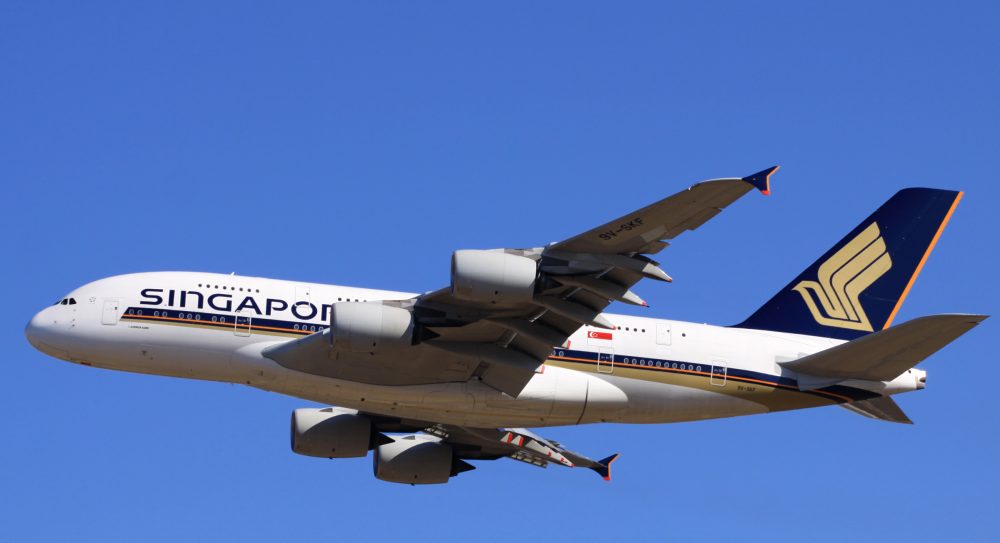
In addition to having the world’s
best airline, Singapore Airlines, Singapore also boasts the world’s best
airport. For the past twenty-plus years, both the airline and airport have
topped or nearly topped best airline and airport lists.
It is very easy to navigate through
Changi and be landside in minutes. When I went last year, my flight arrived at
about 10 p.m. and I was landside and in a taxi by 10:15 p.m. But it is all
about timing. The other time I transited through Changi, it took about an hour
to just get through passport control which was mid-afternoon.
Getting around:
Singapore has a comprehensive bus
and tube system to get you around quickly. You really appreciate how small
Singapore the nation is by the fact that you can take the tube to the Malaysian
border.
There are several lines to move you
around the city which can be a relief with the air conditioning because
Singapore is always very hot (30 to 35C).
You can pick up a visitor ticket
that lasts for a few days at most major stations and simply tap in and out as
you navigate the area.
Hotel:
You can find bargains or spend a
fortune on hotels in Singapore. For example, the quintessential Singaporean
hotel is the Raffles Singapore which is the home of the Singapore sling. A room
for a night will cost more than £500 a night. The iconic Marina Bay Sands
(pictured above) charges more than £300 a night. When I stayed in Singapore, I
stayed at the Naumi Hotel which is about £150 per night for a room in a
five-star boutique hotel located in the shadow of the Raffles.
Accommodations tend to range in
price depending on the area of Singapore you are staying.
Food:
Food prices in Singapore can be a
big bargain or a bank-breaker. I would highly recommend eating at Hawker Stands
located throughout the city.
Hawker food is street food but you
don’t need to fear stomach bugs as you would with street food in other parts of
Asia because Singapore has even higher health standards for food vendors that
Europe or North America.
Hawker stands are set up to look
like food courts and are found in Chinatown, Little India, and the Malay
Quarter. Laksa, Chili crab, and satay are the national dishes of Singapore and
found anywhere food is served.
One recommendation I make is to get
to Hawker Chan at the Chinatown Hawker complex. It is the world’s cheapest
Michelin-starred meal. Hawker Chan sells soy chicken and rice. It is a simple
dish but excellent. You can get this one-star Michelin dish for about £2.50.
Hawker Chan is easy to find. Head to the Hawker stand in Chinatown and look for
the long line. When I went, I got there at about 11:30 a.m. and there were
probably about 15 people ahead of me, but a few minutes later, there were about
100 people behind me. So get there early.
Safety:
Next to Japan and Iceland, Singapore
is one of the safest places I have ever visited. Not once did I need to worry
about suspicious looking people or potential pickpockets.
Bring a light cardigan:
As I said, it is 30 to 35C everyday
in Singapore, but you need to have a cardigan or light jacket handy every time
you go indoors.
That is because most buildings set
their air conditioning about about 20C so it feels like you have entered a
fridge every time you go indoors.
Things to do:
For years, Singapore was only a business centre, but now the country is diversifying into tourism thanks to the additions of the Esplanade and the Marina Bay projects. The areas are centres for tourism.
Even if you cannot afford to stay in
the Marina Bay Sands hotel, the site has many attractions open to the public.
The most iconic is the 191-metre infinite pool that sit atop the three towers
like a surf board. It also houses the Formula One race circuit, a casino,
shops, restaurants, and a canal complete with gondola rides similar to The
Venetian complex in Las Vegas.
Singapore is also a mecca for
shopping with several shopping malls with everything from affordable brands
like H&M to luxury items from Louis Vuitton, so it has something for
everyone.
The world’s best airport
Changi International is a mainstay
at the top of best airports in the world surveys. If you have a long layover,
Changi is one of the best places to stay. In addition to the usual hotels,
lounges and shops in most airports, Changi also has two cinemas that show
movies for free, a tropical garden, and an aquarium.
The new Terminal 4 building is the
most technologically advanced airport terminal in the world. Other than
security, it is possible to get from landside to the plane without having to
interact with staff. You can go to a check in kiosk, scan your passport, and
receive your boarding pass and luggage tags. After you affix your tags, you
take your bags to an automated counter where you place it on the scale/conveyor
belt and it moves on to the luggage area. If you had your biometric data
recorded on entry (and you would have unless you are a child), then you go to
the automated passport control and follow the directions to clear immigration.
You will interact with staff at security as that part is still operated with a
human presence. When you flight is called, you can use the biometric gates to
scan your boarding pass and the machine takes your retina scan and clears you
to board your flight.
Singapore is probably my favourite
city in the world to visit because it is safe, clean, and has a variety of
options that meet all budgets. You won’t want to spend more than a few days in
Singapore as it is an expensive country and you can see the main sights within
two to three days. Singapore is a good add-on to any holiday that takes you to
Southeast Asia.
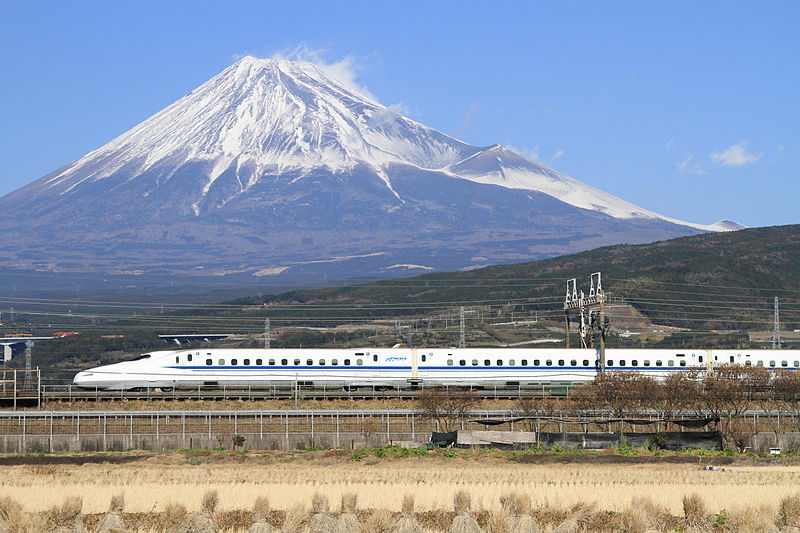
A Shinkansen train rockets by Mount Fuji on its way to southern Japan.
So now you have an itinerary in mind
and have booked your flights. You are firmly committed to your trip at this
point.
Up next is not hotel reservations,
but rail pass purchasing. Intercity travel in Japan — by land, air or rail — is
very expensive. You should invest in a Japan Rail Pass.
These passes are sold outside of
Japan to foreign nationals and cannot be purchased in Japan. JR Passes are
available in 7, 14, and 21-day packages and will cost you £211 (7-day pass),
£336 (14-day pass), and £430 (21-day pass).
You should consult the go-to
Japanese website for train prices and schedules, Hyperdia. This site allows you to plot
travel based on date, time, and train type.
To give you an idea of how valuable
the JR Rail Pass is, consider that a return train journey from Tokyo to Osaka
will cost you £200 if you bought a ticket in Japan. That is almost the price of
a 7-day rail pass.
Bear in mind, the JR Rail Pass
cannot be used on the superfast Nozomi Shinkansen trains that operate from
Tokyo to southern points. It is valid on the superfast north and westbound
trains, the Hyabusa and Kagayaki respectively.
What happens after you order a pass?
A few days after your purchase, an exchange order will be in your
post box. The exchange order is NOT a pass. You cannot arrive in Japan and
start using it. You will need to visit a JR Rail office where you can submit
the exchange order which will be processed into a rail pass.
Passes expire at midnight after the
last day. For example, a 7-day pass expires at midnight on 8 July if activated
anytime on 1 July. By this, I mean you can use your pass on 7 July until just
about midnight. After that, it will not work. The same idea works for the 14
and 21-day passes.
If your trip is going to be longer
than the pass you have, you may need to be a bit strategic, especially if you
flew into Narita and plan to use the Narita Express to the airport instead of
paying 3,500 yen for the ticket. For example, you have planned a 10-day journey
to Japan to visit Tokyo, Osaka, and Hiroshima which will put you in the country
from 1 to 10 July. If you flew into Narita and wanted to save 3500 yen and use
your pass on 10 July to get back to the airport, consider sightseeing in Tokyo
first and activating your pass on 3 July which will make the 7-day period end
on 10 July.
Another bonus with the JR Pass is
that you can use it for travel on the JR Yamanote line in the Tokyo Subway or
the Osaka Loop Line in Osaka. In both cities, most of the must-see sights are
within reasonable walking distance of stations on the lines.
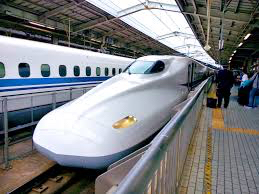
Shinkansen trains travel at speeds of more than 275 km/h. It is possible to do Hiroshima in a day trip (800 km), but it would be a very long day.
Tips and tricks
Do not lose your pass. It
cannot be replaced and you will be stuck paying for train tickets if you lose
it.
The pass is valid not only on
the circle lines in Tokyo and Osaka, and the Shinkansen, it is valid on any
train system owned by Japanese Rail. You will know this if the service begins
with the letters JR.
If you choose to use the north
and westbound trains, seat reservations are mandatory. They are not mandatory
on the southbound trains but if your trip falls on a Japanese holiday, you may
need to if you don’t want to stand.
Go to any Shinkansen office in
the train stations and you can make your reservations. A perk of being a JR
Pass holder is that seat reservations are free.
When you reserve a seat, you
will receive a printed green card with your train letter and seat number on it.
If you look at train timetables in Japan, you will notice that trains tend not
to stop for more than a minute. Do not despair. The platforms have demarcations
that tell you where to stand if you have a reservation. Trains normally run
with 7 or 9 carriages. So you will see demarcations for 7 and 9-carriage
trains. Signs will tell you where your train car will stop and you can line up
in the demarked zone. It makes boarding very efficient and the quick stop is
not an issue at all.
Unlike English trains that have
luggage racks, Shinkansens and other trains in Japan do not have them. But the
overhead rack is sturdy enough to hold a large suitcase. You can place your
bags there.
Train tickets and passes are
available in standard and first class. There is no need to splurge on first
class unless you want a carpeted carriage and a plusher seat. Legroom in
standard is about two to three times of standard in British trains. You have
enough room to sore a suitcase at your feet and still be comfortable.
The seating arrangement on
standard class Shinkansen carriages is 3 on the left side and 2 on the right. If
you are travelling in groups, it is possible to spin one set of seats around so
everyone can face each other.
TIP: If you are travelling
south from the Tokyo region, try to get a seat reservation on the right side of
the train. About 40-45 minutes outside of Tokyo, you will have a glorious view
of Mount Fuji. These seats tend to sell out quickly so if you are efficient try
to book them a few days ahead of your journey.
Etiquette, food, and drinking
Japan is a country that is built on order, conformity and
politeness. While no Japanese person will yell at you for social faux pas, they
will judge you with their stares. Here are a few things to consider:
It is perfectly OK to eat and
drink on the trains. In fact, every station has many food stalls serving
prepared foods. One of the most popular is the eki-ben. Eki is the Japanese
word for station while ben is the abbreviation of Bento Box. So an Eki-ben is a
Bento Box you can buy in the station and enjoy on the train as you watch the
countryside whiz by at speeds of more than 275 km/h.
Japan is a clean society so
remember to take your rubbish with you when you leave the train. There are
rubbish bins on the platforms so you can get rid of your garbage there.
It is considered rude to chat
on your mobile in the seating areas. Go to either end between the carriages if
you need to use the phone.
In the next section, I will write
about accommodations which can be a challenge considering Tokyo is among the
world’s most expensive cities. I will introduce you to capsule hotels, business
hotels, and ryokan hotels.

 Taking the road best travelled