

One of the appeals of living in Europe is the extensive transportation infrastructure that criss-crosses the continent. In theory, it is possible to get from the smallest villages in England to Moscow by rail.
Train travel is the best way of seeing and experiencing a new culture.
It immerses you in the culture because you are travelling with locals. If you rent a car you are focussed on driving and not on the scenery. Even if you hire a car and driver, you are enclosed in your vehicle and not really experiencing the culture.
We travel to learn about other people. Travellers tend to be more open-minded and have a different perspective of reality than those who choose to stay at home and rely on accounts of other cultures by people who have hidden agenda.
This post looks at the pros and cons of train travel. While some systems are extremely efficient, others can be chaotic and unreliable.
British rail or should I say British fail
One of the appeals of living in Europe is the extensive transportation infrastructure that criss-crosses the continent. In theory, it is possible to get from the smallest villages in England to Moscow by rail.
Lots of literature has been written presenting rail travel as a romantic notion aboard trains with fine dining and well appointed state cars.
But contemporary rail travel, especially in the UK, has become very unreliable to the point that I prefer to pay three times more for long distance taxis than rely on the trains to get me to the airport.
In fact, the only time I use British Rail if I am flying is if my flight is the next day from London.
2018 was one of the worst years on record for British train companies with unprecedented levels of strikes and cancellations on networks in the southeast and north of England.
Studies showed that more than 70 percent of commuters in the Greater Manchester Area drove to work instead of relied on trains because of the unreliability of the system.
The BBC reported that in July 2018 almost 33 percent of Northern Rail trains were cancelled.
In April and May I took two train journeys on which trains were delayed enough to have a knock-on effect that led to missed connections.
Dutch, German train systems are epitome of efficiency
In mainland Europe, trains to tend to run to schedule are more reliable than British trains.
One of the advantages of trains in the Netherlands is that all tickets are flexible, meaning you can use them on any train. In the UK, flexible tickets are the most expensive while the cheapest prices are on specific trains on a specific day.
Germany’s Deutsche Bahn is a fast and efficient service but is more expensive that flying around the country. Thanks to post-9/11 security measures, it may be cheaper to fly from Munich to Berlin, but you won’t save any time over taking the train.
Asian services grounded in punctuality, hospitality
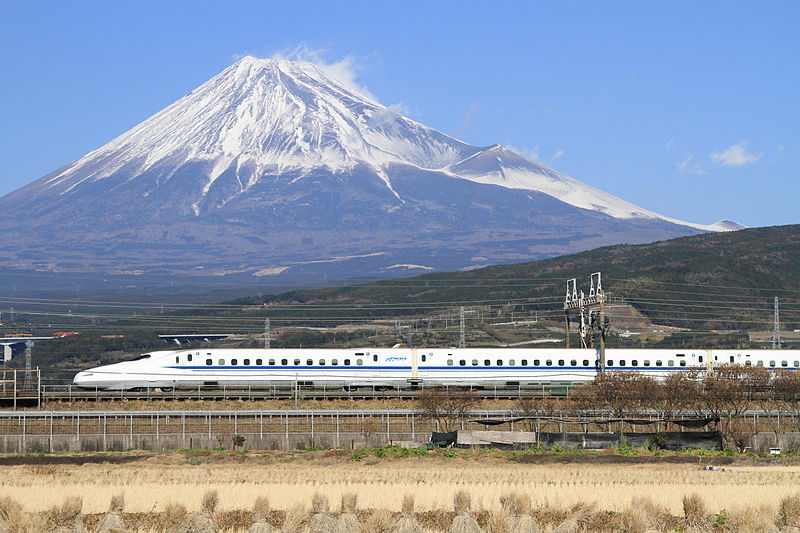
By comparison, the Japanese Rail system is one you can navigate by time. They are on time about 99 percent of the time. In fact, if the train is one minute late, passengers receive an apology. Japan Rail delays is due to unforeseen circumstances, such as a natural disaster or wildlife collision.
By contrast, British rail companies’ delays and cancellations tend to be due to not enough staff to run the train and poor scheduling decisions.
Train travel in India is a challenge. In 2011, I took two trains in India: one between Lucknow and Varanasi and the other between Jhansi and Agra. Both were decent, clean experiences, but for some odd reason the Lucknow to Varanasi pulled up about 100 metres from the station and stayed there for 45 minutes for no apparent reason.
The Jhansi to Agra train was part of the Shatabdi Express between Bhopal and Delhi. Shatabdi trains are express trains between major cities and are among the fastest trains.
On the Varanasi-bound train, we sat in AC Chair Class and first class on the Shatabdi train.
One of the great things about travelling by train in India is interacting with locals. People are very friendly and willing to share their food with you. It’s as close to an authentic Indian experience as you are most likely to get.
The first class service is like a cross between a nice restaurant and a good airline. You have comfortable seats with deep recline. Between each stop, train staff serves dinner in courses with each course delivered between stations.
If you are planning to do a train journey, I highly recommend consulting The Man in Seat Sixty-One. This is a comprehensive website with guides and instructions on how to use railway services all over the planet.
Travel delays are out of our hands because we rely on other people. Don’t let bad services lead you to reject train travel as a viable means of seeing a country. It is usually fast, cheap, and the best way to experience culture as you will be seated in the middle of carriages filled with people from the country you are visiting.
One of the appeals of living in Europe is the extensive transportation infrastructure that criss-crosses the continent. In theory, it is possible to get from the smallest villages in England to Moscow by rail.
Lots of literature has been written presenting rail travel as a romantic notion aboard trains with fine dining and well appointed state cars.
But contemporary rail travel, especially in the UK, has become very unreliable to the point that I prefer to pay three times more for long distance taxis than rely on the trains to get me to the airport.
In fact, the only time I use British Rail if I am flying is if my flight is the next day from London.
2018 was one of the worst years on record for British train companies with unprecedented levels of strikes and cancellations on networks in the southeast and north of England.
Studies showed that more than 70 percent of commuters in the Greater Manchester Area drove to work instead of relied on trains because of the unreliability of the system.
The BBC reported that in July 2018 almost 33 percent of Northern Rail trains were cancelled.
In April and May I took two train journeys on which trains were delayed enough to have a knock-on effect that led to missed connections.
Dutch, German train systems are epitome of efficiency
In mainland Europe, trains to tend to run to schedule are more reliable than British trains.
One of the advantages of trains in the Netherlands is that all tickets are flexible, meaning you can use them on any train. In the UK, flexible tickets are the most expensive while the cheapest prices are on specific trains on a specific day.
Germany’s Deutsche Bahn is a fast and efficient service but is more expensive that flying around the country. Thanks to post-9/11 security measures, it may be cheaper to fly from Munich to Berlin, but you won’t save any time over taking the train.
Asian services grounded in punctuality, hospitality
By comparison, the Japanese Rail system is one you can navigate by time. They are on time about 99 percent of the time. In fact, if the train is one minute late, passengers receive an apology. Japan Rail delays is due to unforeseen circumstances, such as a natural disaster or wildlife collision.
By contrast, British rail companies’ delays and cancellations tend to be due to not enough staff to run the train and poor scheduling decisions.

Train travel in India is a challenge. In 2011, I took two trains in India: one between Lucknow and Varanasi and the other between Jhansi and Agra. Both were decent, clean experiences, but for some odd reason the Lucknow to Varanasi pulled up about 100 metres from the station and stayed there for 45 minutes for no apparent reason.
The Jhansi to Agra train was part of the Shatabdi Express between Bhopal and Delhi. Shatabdi trains are express trains between major cities and are among the fastest trains.
On the Varanasi-bound train, we sat in AC Chair Class and first class on the Shatabdi train.
One of the great things about travelling by train in India is interacting with locals. People are very friendly and willing to share their food with you. It’s as close to an authentic Indian experience as you are most likely to get.
The first class service is like a cross between a nice restaurant and a good airline. You have comfortable seats with deep recline. Between each stop, train staff serves dinner in courses with each course delivered between stations.
If you are planning to do a train journey, I highly recommend consulting The Man in Seat Sixty-One. This is a comprehensive website with guides and instructions on how to use railway services all over the planet.
Travel delays are out of our hands because we rely on other people. Don’t let bad services lead you to reject train travel as a viable means of seeing a country. It is usually fast, cheap, and the best way to experience culture as you will be seated in the middle of carriages filled with people from the country you are visiting.













 Taking the road best travelled