
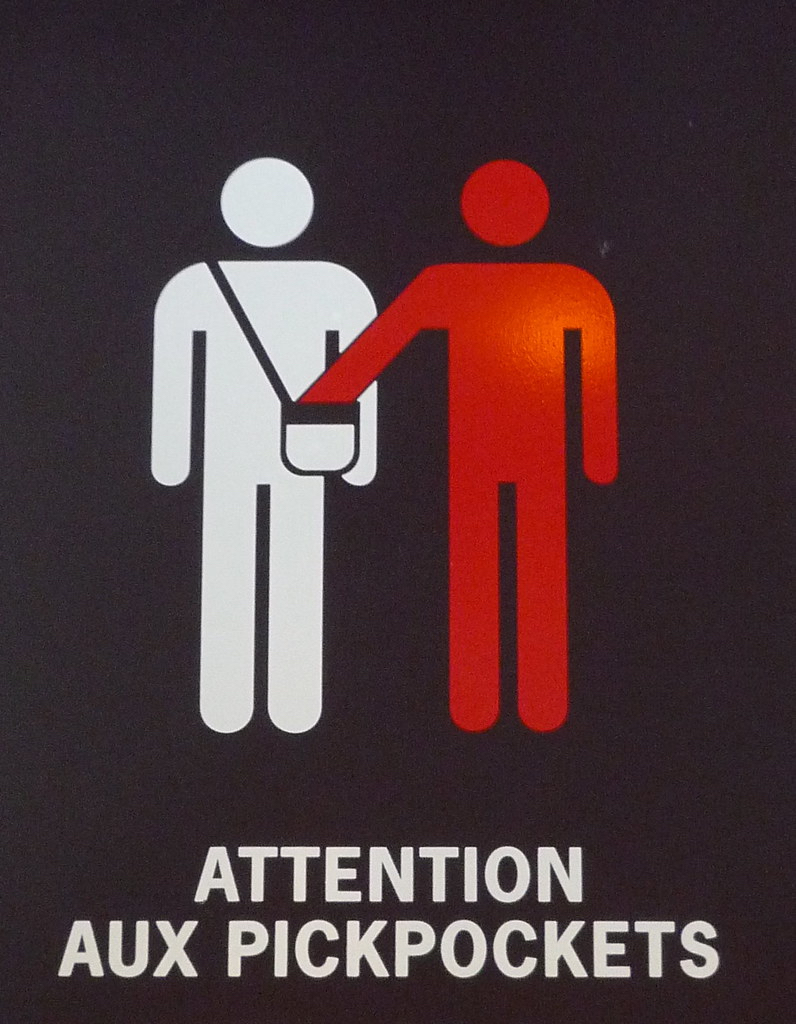
One of the biggest turnoffs for travellers is a scam. Locals see unfamiliar tourists as opportunities to make money.
A few tips can help you to become savvy travellers and make it more difficult for scammers to take your hard-earned money. After all, you worked all year to afford your holiday, why should someone ruin that for you?
Taxi scams
This one tends to be prevalent in various forms in Europe and Asia. In Europe, it tends to occur at the airport because there are so many government regulations that mean trying to scam passengers in the city becomes difficult.
Always be wary of someone approaching you in the arrivals lounge asking if you need a taxi. Always say no and go to the official taxi stand. There have been cases of people being left on the side of highways because they refused to pay an extortionate rate to travel.
While taxi stands tend to be where legitimate taxi drivers wait, it does not guarantee you will not be scammed in some way, especially in Asia.
India is notorious for taxi drivers to lie to you that your hotel closed/burned down, the sight you want to see is closed, or the restaurant or shop you want to visit is closed. They do this because they get commissions from some hotels, shops, and restaurants to bring in unsuspecting dupes.
The best way to deal with these people is to insist on going where you want to go or just getting out of the taxi.
In Thailand, you have to insist that the driver turns on the meter or else they get creative with the cost. Taxis in Thailand are very cheap. A fare from Suvarnabhumi Airport to central Bangkok should cost about no more than 400 baht (£10, CAD$17, US$13, or AUD$19). Drivers will conveniently forget to turn on the meter so they can charge you two to three times this price. If they don’t turn on the meter, get out of the taxi.
In Patong, never use a tuktuk because they will all scam you because all of the drivers collude and set extortionate prices. According to the government of Thailand, you should never pay more than 40 baht/kilometre (£1) in a tuktuk. Yet, these drivers will quote you at a rate of 100 baht/km. The nice thing about Patong is you are most likely going to stay in a hotel that is close to Patong Beach and the nightlife so you are not more than 10 to 15 minutes from anywhere.
A good way to avoid transportation scams is to prepay for your transport and use public transit to get around. Yes, you will take longer on the bus or tube but the price is firm. You pay more for prepaid transport but you won’t be asked for more money.
General scams
The objective of the scammer is to separate you from your money. They do this by offering you too-good-to-be-true opportunities. Single men will often be targeted by the honey scam in which an attractive woman or two will approach the man with suggestions of romance to follow.
They usually lead the dupe to a bar where drink and have a good time until an extremely expensive bar bill shows up accompanied by equally intimidating security demanding payment which includes being accompanied to a cashpoint where they will wipe out your daily balance.
Other scams include someone smearing something on your shoe and the partner comes along and cleans it for a ridiculous price.
Gemstone scams also exist where you are shown beautifully stones and the price is very cheap for the stones. These turn out to be nothing more than beautifully painted rocks. Instead of a nice piece of green jade at 90 percent off the market price, you got yourself a green pebble.
How to avoid scams
Whether you are a seasoned veteran or a rookie tourist, someone will attempt to scam you. How well they do depends on you. As I said, you’ve worked hard to save for your trip, don’t give it away to anyone.
In all cases, a scam begins when someone approaches you. My take is, anyone who approaches me is treated with suspicion. The worst is you’ll be wrong, but the best is you’ll be right.
Children are used to rob people so I must include them in my list. But context needs to be considered. For example, if you visit the Peace Park at Hiroshima where there are hundreds of school children who are friendly and want to try out their burgeoning English language skills with you then they aren’t a risk. But if you’re on the steps of the cathedral in Milan and some children run up to you with a newspaper, speaking a language you don’t understand that is when you should move away as quickly as possible.
Sometimes people genuinely want to help you but there are many indicators that will be evident that the person is just being nice and does not pose a threat. My experience shows me that if I’m walking and someone approaches me then it is suspicious. But if I’m walking and I have my phone out trying to track where I am going and looking for landmarks and I am asked where I want to go, chances are that person wants to help. Some scammers will start this way of being helpful before launching into the scam. I just walk away saying no thanks. It will anger them but I believe the law of averages works in your favour. By law of averages, I mean for every nine people who don’t fall victim to a scam, there will be one. So a scammer won’t waste too much time on you if it is evident you aren’t falling for the act because, as the saying goes, there’s a sucker born every minute.
Another easy way to avoid a scam is to check your bill and change closely. After a few drinks, staff in some places may try to get creative with your tab. The lesson here is don’t drink to the point where you don’t care about the price. Always ensure that the bill reflects your orders and that the change you receive in bars, restaurants, and shops is exactly what you should receive.
All it takes is one scam to be successful to turn people off holidays, countries, and cultures. The best way to have a successful holiday is to plan and that means planning for scams. If you plan for scams, then you know how to avoid them.
 Taking the road best travelled
Pingback: The holy city: Varanasi is a true wonder as thousands make pilgrimages to Hindu city | Taking the road best travelled