
One of the jewels in the Southeast Asian crown has to be Singapore, the tiny city-state that has been described as Disneyland with the death penalty.
I had the opportunity to spend a few days in the Lion City in the summer of 2018. Without compare, Singapore is the cleanest country I have ever visited.
A big part of that cleanliness is due to draconian laws that exist in the country. Heavy fines and sometimes caning with a thick, rattan cane are the punishments for littering, jay-walking, spitting, or drinking or eating on public transport.
The result has been an immaculate country where you probably could eat from the ground.
Chewing gum is banned except for medical purposes (nicotine gum) and other than a pack of cigarettes you aren’t allowed to bring in duty frees.
Although enforcement tends to be lax, the lore of Singapore law is enough to ensure conformity especially among tourists who have heard of the country’s reputation.
Getting in:
There are three ways into Singapore: by air at Changi Airport, by land at the Malaysian border, or by sea on a cruise ship. The vast majority tend to fly into Singapore.
In addition to having the world’s best airline, Singapore Airlines, Singapore also boasts the world’s best airport. For the past twenty-plus years, both the airline and airport have topped or nearly topped best airline and airport lists.
It is very easy to navigate through Changi and be landside in minutes. When I went last year, my flight arrived at about 10 p.m. and I was landside and in a taxi by 10:15 p.m. But it is all about timing. The other time I transited through Changi, it took about an hour to just get through passport control which was mid-afternoon.
Getting around:
Singapore has a comprehensive bus and tube system to get you around quickly. You really appreciate how small Singapore the nation is by the fact that you can take the tube to the Malaysian border.
There are several lines to move you around the city which can be a relief with the air conditioning because Singapore is always very hot (30 to 35C).
You can pick up a visitor ticket that lasts for a few days at most major stations and simply tap in and out as you navigate the area.
Hotel:
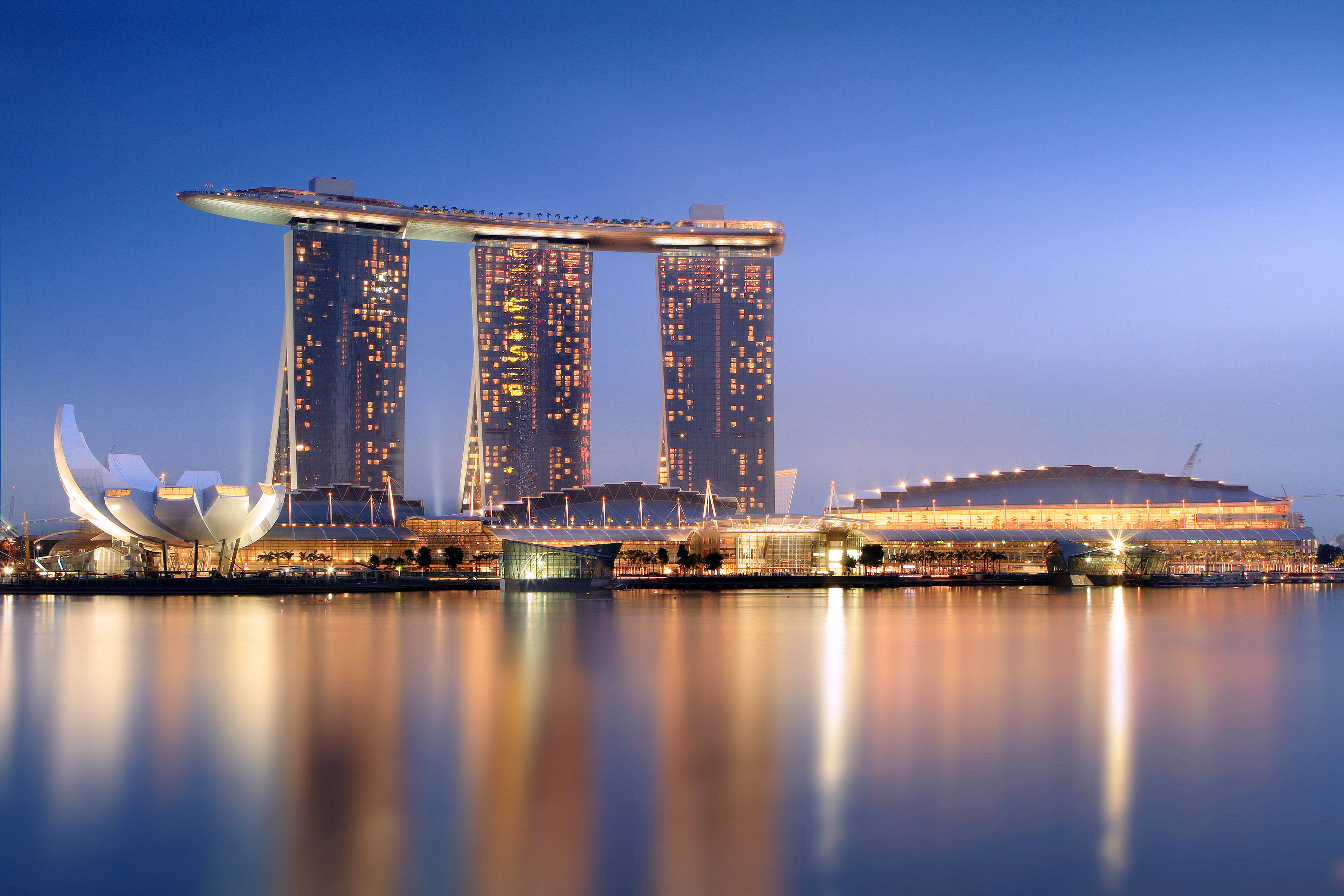
You can find bargains or spend a fortune on hotels in Singapore. For example, the quintessential Singaporean hotel is the Raffles Singapore which is the home of the Singapore sling. A room for a night will cost more than £500 a night. The iconic Marina Bay Sands (pictured above) charges more than £300 a night. When I stayed in Singapore, I stayed at the Naumi Hotel which is about £150 per night for a room in a five-star boutique hotel located in the shadow of the Raffles.
Accommodations tend to range in price depending on the area of Singapore you are staying.
Food:
Food prices in Singapore can be a big bargain or a bank-breaker. I would highly recommend eating at Hawker Stands located throughout the city.
Hawker food is street food but you don’t need to fear stomach bugs as you would with street food in other parts of Asia because Singapore has even higher health standards for food vendors that Europe or North America.
Hawker stands are set up to look like food courts and are found in Chinatown, Little India, and the Malay Quarter. Laksa, Chili crab, and satay are the national dishes of Singapore and found anywhere food is served.
One recommendation I make is to get to Hawker Chan at the Chinatown Hawker complex. It is the world’s cheapest Michelin-starred meal. Hawker Chan sells soy chicken and rice. It is a simple dish but excellent. You can get this one-star Michelin dish for about £2.50. Hawker Chan is easy to find. Head to the Hawker stand in Chinatown and look for the long line. When I went, I got there at about 11:30 a.m. and there were probably about 15 people ahead of me, but a few minutes later, there were about 100 people behind me. So get there early.
Safety:
Next to Japan and Iceland, Singapore is one of the safest places I have ever visited. Not once did I need to worry about suspicious looking people or potential pickpockets.
Bring a light cardigan:
As I said, it is 30 to 35C everyday in Singapore, but you need to have a cardigan or light jacket handy every time you go indoors.
That is because most buildings set their air conditioning about about 20C so it feels like you have entered a fridge every time you go indoors.
Things to do:
For years, Singapore was only a business centre, but now the country is diversifying into tourism thanks to the additions of the Esplanade and the Marina Bay projects. The areas are centres for tourism.
Even if you cannot afford to stay in the Marina Bay Sands hotel, the site has many attractions open to the public. The most iconic is the 191-metre infinite pool that sit atop the three towers like a surf board. It also houses the Formula One race circuit, a casino, shops, restaurants, and a canal complete with gondola rides similar to The Venetian complex in Las Vegas.
Singapore is also a mecca for shopping with several shopping malls with everything from affordable brands like H&M to luxury items from Louis Vuitton, so it has something for everyone.
The world’s best airport
Changi International is a mainstay at the top of best airports in the world surveys. If you have a long layover, Changi is one of the best places to stay. In addition to the usual hotels, lounges and shops in most airports, Changi also has two cinemas that show movies for free, a tropical garden, and an aquarium.
The new Terminal 4 building is the most technologically advanced airport terminal in the world. Other than security, it is possible to get from landside to the plane without having to interact with staff. You can go to a check in kiosk, scan your passport, and receive your boarding pass and luggage tags. After you affix your tags, you take your bags to an automated counter where you place it on the scale/conveyor belt and it moves on to the luggage area. If you had your biometric data recorded on entry (and you would have unless you are a child), then you go to the automated passport control and follow the directions to clear immigration. You will interact with staff at security as that part is still operated with a human presence. When you flight is called, you can use the biometric gates to scan your boarding pass and the machine takes your retina scan and clears you to board your flight.
Singapore is probably my favourite city in the world to visit because it is safe, clean, and has a variety of options that meet all budgets. You won’t want to spend more than a few days in Singapore as it is an expensive country and you can see the main sights within two to three days. Singapore is a good add-on to any holiday that takes you to Southeast Asia.
 Taking the road best travelled