
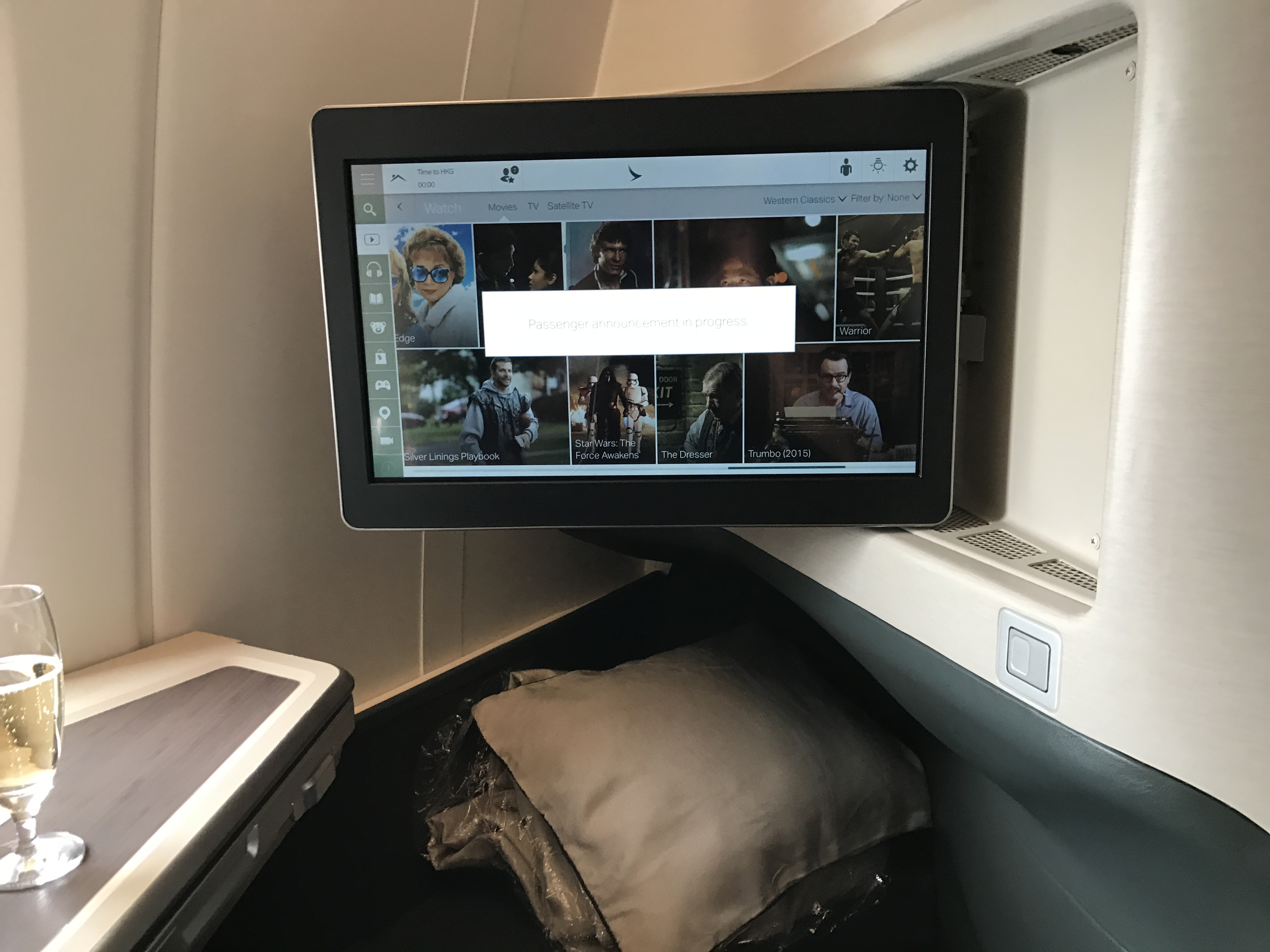
Air traffic is no longer the glamourous experience it once was. Post-9/11 travel means invasive searches, long lines at security, and removing various articles of clothing.
After that, you wander aimless for a couple of hours around an airport terminal looking at “duty free” items that seem to be more expensive than the high street or you buy a bottle of soft drink for the price of a six-pack.
You then bundle onto a plane and are crammed in like sardines with people who recline the seat to within inches of your face or next to someone who has never heard of deodorant or a shower.
So if it is like this, is it worth investing in business class?
That means dedicated, shorter check in lines, exclusive lanes and areas in the security area, and a lounge far from the maddening crowd often with “complimentary” food and drink. I saw complimentary in quotes because it isn’t free. You paid for it when you paid at least five times the economy rate for your ticket.
Yes, the drawback of business class is it is very expensive, often in the several thousands of pounds. But there are ways around that.
Points systems
Loyalty has its perks. Belonging to an airline alliance means accumulating points that can be used towards a free flight or a deeply discounted one.
There are three main alliances: Star Alliance, One World, and Skyteam.
Oddly, two of the worlds biggest airlines — Emirates and Etihad — do not belong to any alliance, but you can accrue points for Qantas because the Australian carrier has a codeshare agreement with Emirates.
Every time you fly, you collect points proportionate to the distance travelled. However, accrual is based on the level of your ticket. The cheapest prices usually mean fewer perks including sometimes lower accrual. For example, some airlines will only allow you to accumulate 50 to 75 percent of the actual number of points on a non-flexible sale fare. The more you pay for a ticket, the more points you get. A business class ticket accrues at a rate of 150 percent for the lowest ticket and sometimes 200 percent for the full fare.
When you collect points, you accrue two types of points: usable points and tier points. When you’re waiting to board a flight, you may hear the ticketing agent talk about “Oneworld Emerald”, “Star Alliance Gold”, “Skyteam Elite Plus”. These are the highest tiers in the alliances. The more points you accrue the more tier points you get. When you reach certain levels, you move up to the next tier level. Being at the highest tier level gives you perks such as free access to lounges and free upgrades. So if someone tells you they got a free upgrade to business, the most likely reason is because they belong to a high tier in an airline alliance programme.
But since most of us don’t fly more than a few times a year, it is difficult to accumulate points. This is why the major alliances partner with credit card companies to offer you the chance to accumulate points faster. Let’s take a look at the American Express British Airways Express Platinum Plus card as an example of points accrual.
New card members will earn 25,000 BA points if they spent £3,000 in the first three months of membership. For every £1 spent on the card above and beyond that, you accrue 1.5 point. When you purchase travel with British Airways, you also get 3 points for every £1 you spend.
Remember, points are use to offset the cost of the flight and not the taxes. You still have to pay the taxes. So, let us say you spent £3,000 in the first three months of card usage. Your 25,000 makes you eligible for a free economy flight in the peak season from London to Vancouver. You just have to pay £239.12 for the taxes. So basically, you can fly roundtrip from London to Vancouver for £239.12. No charter airline offers that.
Looking again at the most expensive time of travel, you would need 75,000 for a business class flight to Vancouver from London and pay just £418.62 for the taxes. But you can get a business class flight on this route for as low as 37,500 points plus £1,113.62.
Yes, £1,113.62 is a lot of money but when you consider that you are accumulating points as you go about your daily life, it isn’t that bad because a business class flight from London to Vancouver at the height of peak season will cost £3623.52.
Ask because you never know
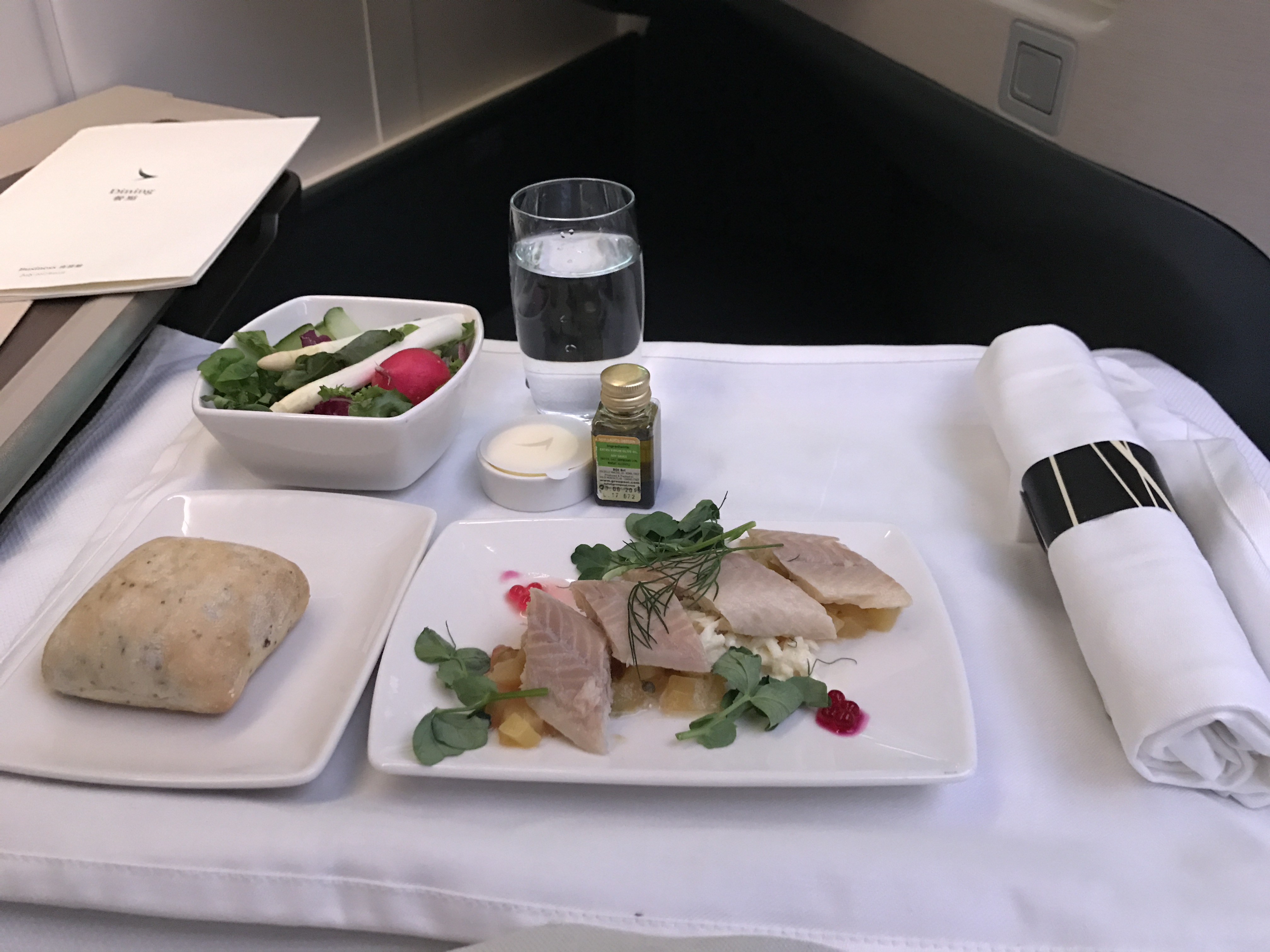
It also doesn’t hurt to ask at check in if there are any upgrades available. Sometimes you might happen upon a bargain.
When I was moving from Canada to the UK, I called KLM a few days before my flight to see if they anticipated any deals on upgrades. The reason I did this was because I knew KLM is a very popular airline on the Toronto to Amsterdam route because it offers a lot of connecting flights into Africa and is popular with Africans returning home for holidays.
I was told there could be a deal and to check at the airport. Even before check in opened, I went to the ticket counter and asked and was told I could upgrade my Toronto to Amsterdam flight only for $250 (less than £150). But it doesn’t always work. I was once flying from Toronto to London and was told the upgrade would cost $750.
The reason you can get a deal is because airlines overbook economy. They sell more tickets than capacity because they know there are no-shows or cancellations. If they know that they will be overbooked they begin to offer deals and discounts to get people to move to other flights or to move into business class.
Regional flights
This one tends to work well in certain circumstances. Do not use this to fly a short haul flight in North America or Europe unless the airline has a new plane it is putting through its paces.
Regional business class tends to be narrow jets with a tray covering the middle seats to give you the illusion you have more room. The seat dimensions are the same as economy and you may get a hot meal. That’s it.
However, if an airline takes delivery of a new wide-bodied aircraft, then you can experience luxury for a low price. For example, in the late 2000s, Air France took deliver of its first superjumbo Airbus A380. Before it was deployed on international long-haul routes, it was put through its paces and used to train staff on a Paris to London route. Prices were the same as the normal smaller planes so you could have experienced business class in a brand new airplane for £300.
But it is different in Asia where many airliners use only wide-bodied jets. Cathay Pacific, Thai Airways, and Singapore Airlines only flight planes with two aisles inside. So, if you fly within the region, you will fly on an older plane but one with an authentic business class product. Again, you would expect to pay about £300 for the privilege.
Fifth freedom flights
Fifth freedom refers to an airline being allowed to sell tickets for flights between two other countries.
Emirates, for example, has a flight that goes Dubai-Bangkok-Hong Kong, Hong Kong-Bangkok-Dubai. Because Emirates is based in Dubai it has fifth freedom to sell seats on the Bangkok-Hong Kong sectors.
These are usually sold at regional rates because these represent bonus income for the airline. So, for £300 you can enjoy a 3.5-hour business class flight on an Emirates Airbus A380.
So, unless you have deep pockets and lots of disposable income, business class flying is probably out of your reach, but there are ways you can take advantage of offers that will allow you to experience the joys of business class travelling.
Just remember one thing: Once you try business class, it is very hard to go back to economy.
 Taking the road best travelled