Some of the best trips you can take are the ones that are far from the maddening crowds.
In the past 10 to 15 years, travellers have gone en masse to the United Arab Emirates’ two biggest states, Dubai and Abu Dhabi.
But this post is not about the gaudiest place on earth that is built on superlatives, but a tiny nation to the south — Oman.
I have been to Muscat, Oman on two occasions and it is m favourite place in the Middle East.
Unlike the UAE where things are not what they seem, there is a sense of authenticity to Oman. This is first evident by the fact that any tour guide you hire in Muscat is most likely an Omani. On a few tours through Dubai and Abu Dhabi, I never had an Emirati tour guide. Sometimes, we want a local to add to the experience.
There are two main ways into Muscat: by sea on a cruise ship at Port Sultan Qaboos or by air at Seeb Airport.
The first thing you notice when you get to Muscat is that it does not have an ultramodern skyline of architectural wonders, but opts for a more modest skyline. Muscat’s planners felt that they wanted to be different from their northern neighbours which restricts buildings to more than three storeys high except for hotels and hospitals.
Everything in the country is immaculate. The lawns are always mowed and looks like someone finished the job with a pair of scissors. The streets are clean and the roads are in excellent shape.
What makes this all truly impressive is that most of the infrastructure did not exist before 1970.
Modern Oman was born out of unrest when current Emir Qaboos bin Said al Said overthrew his father, Sultan Said bin Taimur, in a bloodless coup in July 1970.
This coup was the instrumental starting point for the transformation Oman from an under-developed backwater to an infrastructure that would be the envy of some western countries.
Getting in:
Visa on arrival is available for most western passport holders. For those who need a visa, you can purchase an e-visa at the Royal Oman Police’s website or at Seeb Airport from the money changer kiosks. Holders of Israeli passports and Israeli citizens will be refused entry, but simply have an Israel stamp on other passports is not a problem for entry.
The nation’s flag carrier airline, Oman Air, offers flights from Asia and some destinations In Europe. British Airways, Lufthansa, KLM, Turkish Airlines, Qatar Airways, Emirates, and Etihad offer flights to North American travellers.
Getting around:
Taxis tend be the most popular way of getting around Muscat. You could also rent a vehicle because driving is relatively OK in Muscat compared to other Middle Eastern countries where rules of the road are considered suggestions rather than law. Besides, you will love the cost of petrol. To put this into perspective, a litre of petrol is cheaper than a litre of water in Muscat. Current prices put a litre of petrol at £0.45 (CDN$0.75, US$0.57, 0.51 euros).
Things to do:
Like most Middle Eastern countries, much of the social life and trendy parts of Muscat can be found around the Corniche which is the sea wall area near Port Qaboos. Here, you can find restaurants and the Mutrah Souq where you can find bargains.
To catch a glimpse of Oman’s fishing past, you can travel to Mutrah and watch the day’s catch come in, prepared, and sent out to shops and restaurants.
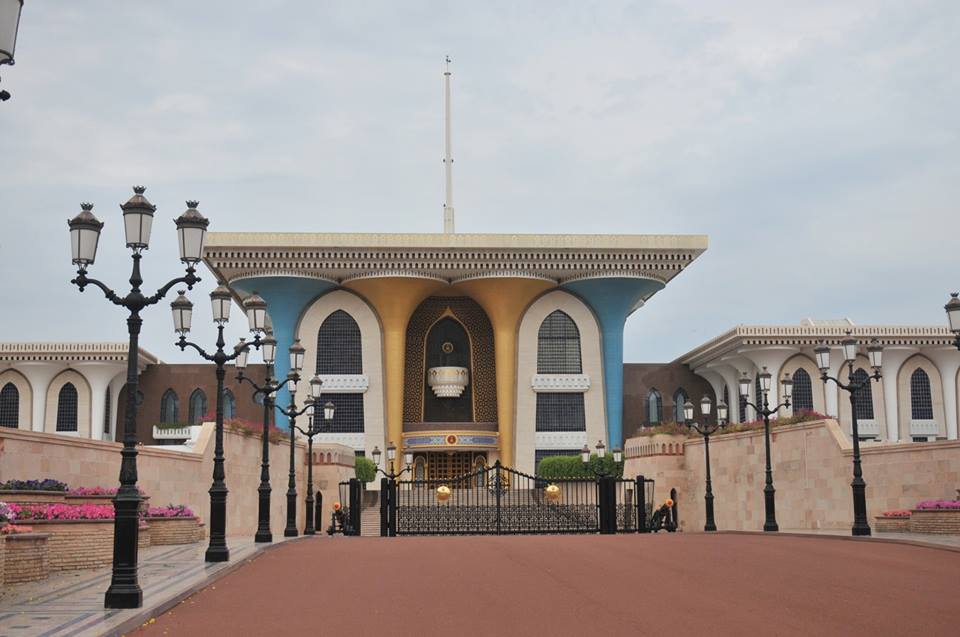
Flanked by the al Jalali and the al Mirani forts, the Qasr al Ayam Royal Palace is one of the world’s most beautiful palaces in the world. Unfortunately, visitors are not allowed to enter the palace, but you are allowed to take photographs of the palace’s entrance.
One of the best museums to learn about Omani history is the Bait al Zubair Museum which houses artefacts of Oman and an overview of the flora and fauna that can be found around Oman.
Outside of the central business district is the jewel of the Muscat landscape: Sultan Qaboos Grand Mosque, which is the third largest mosque in the world.
Tours are available between 9 and 11 a.m. daily. The highlights of the mosque include a Swarovski crystal chandelier, one of the largest Persian carpets, and the impeccable marbel panelling. Like any other mosque in the Islamic world, female travellers must make sure to cover their hair, ankles and wrists while inside the mosque.
Sleep:
There is a hotel choice for all budgets which makes Muscat an appealing place for hotels. You can even splurge a little and stay in five-star hotels. The Fraser Suites and Radisson hotels in Muscat have rooms on for less than £100 a night. Even the most opulent of hotels are not badly priced: Kempinski (£200 per night), Shangri-La (£182 to £214), W Hotel (£221), Grand Hyatt (£177).
Safety:
While driving in Muscat is relatively safe, Omanis tend to disregard the speed limit and pass randomly on roads going to other parts of the country.
Homosexuality is considered a crime, therefore, LGBT travellers should exercise caution.
Crime is not a significant issue in Oman.
The biggest concern is the extreme heat associated with a desert nation. The last time I was there, it was 46C. By the time I went out on a 4×4 mountain drive at 8 a.m., it was already 36C. Be sure to drink plenty of water and do what the locals are doing. Usually they will sit in the shade instead of trying to cool down in water. Try to wear loose fitting breathable clothing. Jeans or other tight clothing will overheat you.
 Taking the road best travelled